
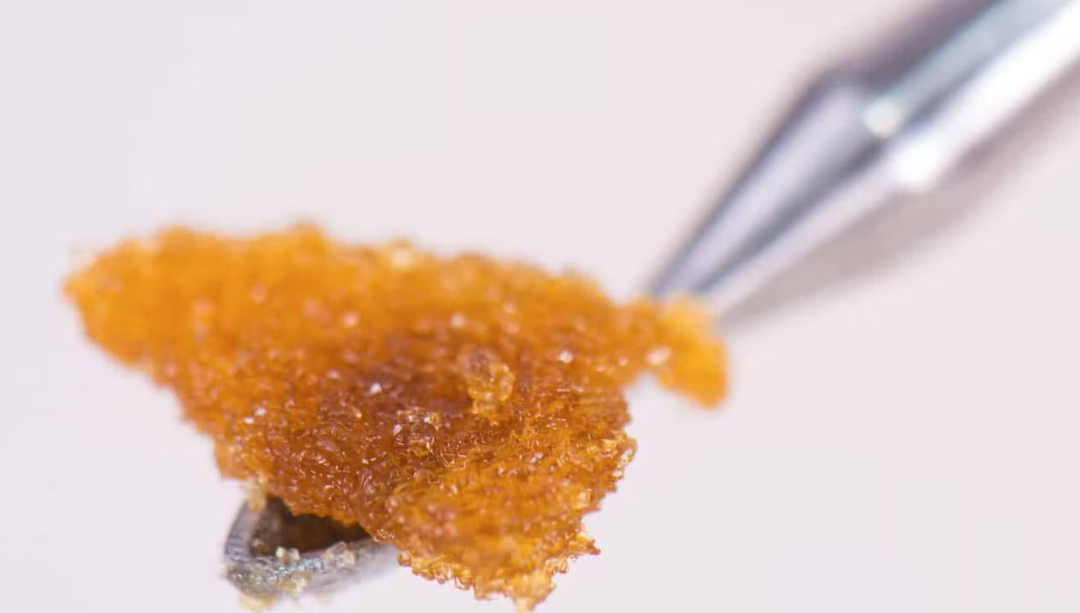
Live badder is a type of cannabis concentrate known for its soft, whipped texture, pronounced aroma and terpene-rich character. But live badder does not necessarily remain exactly the same from the moment it is produced.
Over time, factors such as temperature, oxygen, light, storage conditions and handling can influence the appearance, texture, aroma and chemical profile of a cannabis concentrate.
Understanding how live badder changes can help consumers distinguish between normal ageing and signs that a concentrate may have been poorly stored or compromised.
This Sluggers Vapes guide explains how live badder evolves over time, what changes in colour and texture can mean, why aroma may fade, how terpenes behave during storage, and what quality indicators to examine when evaluating a concentrate. Read our Concentrate complete Guide for more
What Is Live Badder?
Live badder is a cannabis concentrate with a soft, creamy or whipped consistency.
The term “live” generally refers to cannabis material being processed in a way intended to preserve more of the plant’s volatile compounds compared with processes using traditionally dried and cured flower.
Badder, sometimes written as batter or budder depending on the product and production technique, describes the concentrate’s physical consistency.
Fresh examples can range from:
- Creamy
- Whipped
- Soft
- Cake-batter-like
- Malleable
- Glossy
- Airy or mousse-like
The exact appearance depends on the starting material, extraction and post-processing techniques, cannabinoid and terpene composition, temperature and handling.
Because live badder can contain a substantial amount of volatile compounds, its characteristics can change as it ages.
Does Live Badder Change Over Time?
Yes.
Like other cannabis-derived materials, concentrates can undergo chemical and physical changes during storage.
Research on cannabis products has shown that light, oxygen, temperature and storage duration can influence cannabinoid stability, while terpenes can also decrease or transform over time.
This does not mean that every change indicates a bad or unusable product.
Some changes are simply part of ageing.
The important question is whether the change is consistent with normal storage or whether it suggests poor handling, contamination or significant degradation.
How Live Badder Changes With Age
There are four major characteristics worth monitoring:
- Texture
- Colour
- Aroma
- Overall quality
These characteristics are connected to the concentrate’s chemical composition and storage environment.
1. Live Badder Texture Changes
Fresh live badder is commonly associated with a soft, creamy consistency.
Over time, its texture may become:
- Firmer
- Drier
- More crumbly
- Less whipped
- More oily
- More separated
- More dense
The exact change depends on the concentrate’s formulation and storage conditions.
Why Does Texture Change?
Cannabis concentrates contain mixtures of cannabinoids, terpenes, waxes and other plant-derived compounds.
As these compounds interact with their surroundings, the physical structure of the concentrate can change.
Temperature is particularly important.
A concentrate kept at a cooler temperature can become considerably firmer, while warmer conditions can make it softer or more fluid.
Therefore, texture alone is not a reliable indicator of concentrate quality.
A hard concentrate is not automatically old, and a soft concentrate is not automatically fresh.
Fresh Live Badder vs Aged Live Badder
| Characteristic | Fresher Live Badder | More Aged Live Badder |
|---|---|---|
| Texture | Soft and creamy | May become firmer or drier |
| Appearance | Often glossy and consistent | May become darker or less uniform |
| Aroma | Strong and pronounced | Can become less intense |
| Terpenes | More pronounced | May decline or transform |
| Colour | Often lighter depending on product | Can darken with ageing |
| Consistency | Usually more uniform | May become more variable |
This is a general comparison rather than a laboratory test.
Different extraction methods and formulations can age differently.
2. How live badder evolves over time/ Why Does Live Badder Change Colour?
Colour is one of the first characteristics consumers notice.
Fresh concentrates can appear in shades ranging from:
- Pale cream
- Light yellow
- Golden
- Amber
- Light tan
With ageing, some concentrates can become darker.
However, colour should never be used by itself to determine quality.
What Causes Colour Changes?
Oxidation and other chemical reactions can alter the compounds present in cannabis resin and extracts.
Research examining cannabis resin found that exposure to air and temperature was associated with chemical transformations, while long-term storage can alter cannabinoid profiles.
Light exposure can also contribute to degradation.
One long-term study found significant changes in THC and formation of CBN under certain storage conditions, particularly with light and room-temperature exposure.
That means a darker concentrate may reflect ageing, oxidation or storage conditions—but it does not automatically prove that the concentrate is poor quality.
Does Darker Live Badder Mean Lower Quality?
Not necessarily.
A common misconception is:
Light = high quality
and
Dark = low quality.
The reality is more complicated.
Colour can be affected by:
- Starting material
- Cultivar
- Extraction process
- Processing conditions
- Cannabinoid composition
- Terpene composition
- Oxygen exposure
- Light exposure
- Temperature
- Storage duration
Consequently, colour should be considered alongside aroma, texture, laboratory testing and provenance.
3. Live Badder Aroma Changes Over Time
Aroma is another major characteristic of live badder.
Fresh terpene-rich concentrates can have strong aromatic profiles that may include notes described as:
- Citrus
- Pine
- Fruit
- Herbs
- Floral
- Earthy
- Spicy
- Sweet
- Gas or fuel-like
These aromas are largely associated with volatile compounds, particularly terpenes.
Why Can Aroma Fade?
Terpenes are volatile compounds and can be lost or transformed during storage.
Research examining cannabis storage has found that terpene concentrations can decrease over time, while separate research has demonstrated that individual terpenes can undergo different degradation pathways when exposed to heat and ultraviolet light.
This is one reason a concentrate that initially has a highly pronounced aroma may smell noticeably different after prolonged storage.
What Does Fading Aroma Mean?
A weaker aroma can indicate that volatile compounds have been lost.
However, aroma can also be affected by:
- Packaging
- Headspace
- Temperature
- Time since production
- Exposure to air
- Exposure to heat
- Product formulation
A reduced aroma does not automatically mean contamination.
But an unexpected chemical, burnt, mouldy or otherwise abnormal odour is a reason to be cautious rather than assuming the product has simply matured.
4. How Terpenes Influence Live Badder Quality
Terpenes are an important part of the character of cannabis concentrates.
They contribute to:
- Aroma
- Flavour
- Sensory profile
- Product differentiation
Because many terpenes are volatile, preserving them is an important consideration when evaluating concentrates designed around a fresh, aromatic profile.
Research into cannabis storage has found that terpene behaviour is complex, with different terpenes showing different rates of degradation and transformation.
This means that a concentrate’s aroma can evolve rather than simply becoming uniformly “weaker.”
For example, some aromatic notes may become less noticeable while other notes become more prominent.
5. How Oxygen Affects Live Badder
Oxygen is one of the major environmental factors involved in ageing.
When cannabis-derived compounds are exposed to air over time, oxidation reactions can occur.
Studies of cannabis resin have found that exposure to air and temperature can contribute to chemical transformations.
This is why packaging and storage conditions matter.
A container that repeatedly exposes the concentrate to fresh air can create a different ageing environment from a container that is opened less frequently.
Oxygen Exposure Can Contribute To:
- Cannabinoid degradation
- Changes in colour
- Changes in aroma
- Changes in texture
- Alterations in the overall chemical profile
The effect depends heavily on time and environmental conditions.
6. How Light Affects Live Badder
Light is another important factor.
Research into cannabis stability has found that light exposure can accelerate cannabinoid losses, while controlled storage studies have shown substantial differences between samples stored under different environmental conditions.
For this reason, concentrates are generally better protected from unnecessary light exposure.
Why Does Light Matter?
Light can promote photochemical reactions.
Over time, these reactions can contribute to:
- Cannabinoid degradation
- Colour changes
- Terpene changes
- Alterations in the overall chemical profile
This is one reason opaque or light-protective packaging can be preferable for sensitive cannabis products.
7. How Temperature Changes Live Badder
Temperature can dramatically change the physical texture of a concentrate even without permanently changing its chemical composition.
A cooler environment can make live badder:
- Firmer
- Less pliable
- More difficult to manipulate
Warmer conditions can make it:
- Softer
- More fluid
- More glossy
However, prolonged exposure to elevated temperatures can also accelerate chemical changes.
Research on cannabis storage has shown that storage temperature influences cannabinoid and terpene stability, with higher temperatures generally producing greater changes over time.
Therefore, short-term texture changes caused by temperature should not be confused with long-term degradation.
Live Badder Storage: What Matters Most?
If the goal is to preserve the original characteristics of a cannabis concentrate, environmental consistency matters.
The major factors are:
Light
Minimise unnecessary exposure to light.
Oxygen
Limit unnecessary air exposure.
Temperature
Avoid prolonged exposure to excessive heat.
Time
Even well-stored cannabis-derived materials can change with age.
Packaging
Packaging can influence exposure to oxygen, light and environmental conditions.
Research continues to investigate how different packaging environments influence cannabinoid and terpene stability.
Can Live Badder Go Bad?
There is an important difference between ageing and contamination.
A concentrate can naturally change in:
- Colour
- Texture
- Aroma
- Consistency
Those changes do not necessarily mean contamination.
However, an unusual appearance, unexpected odour or evidence of contamination should not simply be dismissed as normal ageing.
Consumers should be especially cautious when there is:
- Visible mould-like growth
- Unexpected contamination
- Strong abnormal odours
- Damaged or compromised packaging
- Missing product information
- No identifiable batch information
- Inconsistent laboratory documentation
When in doubt, laboratory testing and product provenance are more reliable than judging appearance alone.
Live Badder Quality: What Should You Look For?
When evaluating a concentrate, consider more than its colour.
A useful quality checklist includes:
1. Appearance
Is the concentrate reasonably consistent with the product description?
2. Texture
Is the texture consistent with the expected concentrate type?
3. Aroma
Does the aroma correspond with the stated terpene or cultivar profile?
4. Packaging
Does the packaging appear intact and appropriate for the product?
5. Batch Information
Is there identifiable batch or lot information?
6. Laboratory Testing
Is there a genuine Certificate of Analysis where applicable?
7. Cannabinoid Profile
Does laboratory documentation correspond with the stated cannabinoid profile?
8. Product Provenance
Can the product’s source and manufacturer be identified?
These checks provide much more useful information than relying on appearance alone.
How a Live Badder COA Helps Assess Quality
A Certificate of Analysis (COA) is laboratory documentation showing analytical results for a particular product or batch.
Depending on the laboratory and product, testing can provide information about:
- Cannabinoid concentrations
- THC
- CBD
- Minor cannabinoids
- Terpene content
- Residual solvents
- Heavy metals
- Pesticides
- Microbial contaminants
A COA cannot tell you everything about a concentrate’s sensory quality.
However, it can provide objective information that visual inspection cannot.
Check the Batch Number
Ideally, the laboratory report should correspond with the batch or lot on the product.
Check the Testing Date
A report should provide a clear testing date.
Check the Laboratory
The testing facility should be identifiable.
Check the Results
Look for actual analytical results rather than vague claims such as “lab tested.”
Why “Fresh” Does Not Always Mean “Better”
The term fresh is frequently used as a marketing term in the cannabis concentrate industry.
But freshness should not be confused with a guaranteed quality level.
A recently produced concentrate may have:
- Stronger aroma
- More pronounced terpene character
- A different texture
- A brighter appearance
But these characteristics can vary according to production and storage.
Likewise, an older concentrate that has been properly stored may retain more desirable characteristics than a newer product that has experienced excessive heat, light or air exposure.
Storage history matters.
Live Badder vs Other Cannabis Concentrates
Live badder is only one type of cannabis concentrate.
Other commonly discussed concentrate formats include:
- Live resin
- Wax
- Shatter
- Budder
- Sauce
- Diamonds
- Rosin
The physical differences between these products can result from differences in extraction, processing and post-processing.
For example, a concentrate marketed as “sauce” may have a considerably different consistency from badder, while crystalline cannabinoid products can have very different physical characteristics.
This is why consumers should compare products based on their actual formulation and laboratory profile, rather than assuming all concentrates age identically.
Live Badder vs Live Resin
Live badder and live resin are related concentrate categories but are not identical.
Live Resin
Usually associated with a more fluid, sticky or saucy consistency.
Live Badder
Generally associated with a softer, whipped or creamy consistency.
The distinction is primarily about the physical form and processing characteristics rather than simply potency.
When comparing products, look beyond the name and examine:
- Cannabinoid profile
- Terpene profile
- Production information
- Laboratory results
- Texture
- Aroma
- Packaging
Does Live Badder Lose Potency Over Time?
Cannabinoid stability depends on the compound and storage environment.
Research has demonstrated that THC can degrade during prolonged storage, with light, air and temperature affecting the rate of chemical change.
Therefore, it would be inaccurate to claim that a concentrate retains exactly the same cannabinoid profile indefinitely.
The rate of change is influenced by:
- Temperature
- Light
- Oxygen
- Storage duration
- Packaging
- Starting chemical composition
Laboratory testing is the appropriate way to determine the actual cannabinoid concentration of a particular batch.
Does Live Badder Lose Terpenes Over Time?
Terpenes can be particularly sensitive to storage.
Studies have found that terpene concentrations can decrease during storage and that different terpenes behave differently under heat and light exposure.
This means an ageing concentrate can gradually develop a different aromatic profile.
For a product marketed around its terpene character, this can be an important quality consideration.
Signs of Normal Ageing vs Potential Quality Problems
| Change | Could Be Normal Ageing? | Requires Caution? |
|---|---|---|
| Slight colour darkening | Yes | If extreme or accompanied by other changes |
| Firmer texture | Yes | If unexpectedly hard or unusual |
| Reduced aroma | Yes | If replaced by an abnormal odour |
| Texture becoming less creamy | Yes | If accompanied by contamination |
| Terpene profile changing | Yes | If the aroma becomes chemically abnormal |
| Visible mould-like growth | No | Yes |
| Damaged packaging | No | Yes |
| Missing batch information | No | Yes |
| Inconsistent COA | No | Yes |
The table is a general quality framework rather than a laboratory diagnostic.
How to Store Live Badder Properly
For general product-preservation purposes, the main principle is to minimise unnecessary exposure to environmental conditions that accelerate degradation.
That means protecting the concentrate from:
- Excessive heat
- Direct light
- Repeated air exposure
- Contamination
- Unnecessary handling
A suitable sealed container can help reduce environmental exposure.
The exact storage protocol can vary depending on the concentrate formulation and manufacturer’s instructions, so product-specific guidance should take priority.
Why Packaging Matters
Packaging is more than presentation.
It can influence the product’s exposure to:
- Oxygen
- Light
- Moisture
- Temperature fluctuations
- Physical contamination
Research into cannabis storage has examined modified-atmosphere packaging and found that packaging environments can influence individual cannabinoid and terpene compounds, although effects vary by compound and storage conditions.
For consumers, this reinforces an important principle:
Good packaging supports product stability, but packaging alone cannot guarantee quality.
How to Tell If Live Badder Is High Quality
There is no single visual characteristic that proves a concentrate is high quality.
Instead, consider the complete product profile.
A stronger quality assessment includes:
Appearance + Texture + Aroma + Laboratory Testing + Packaging + Provenance
A concentrate with attractive colour but no reliable laboratory documentation should not automatically be considered superior to a less visually impressive product with transparent testing and traceable sourcing.
This is particularly important in an increasingly sophisticated concentrate market.
Live Badder Quality Checklist
Before evaluating a live badder product, ask:
- Is the product clearly identified?
- Is the cannabinoid profile disclosed?
- Is batch information available?
- Is laboratory testing available?
- Does the COA correspond with the batch?
- Is the packaging intact?
- Does the aroma seem consistent with the product description?
- Is the texture consistent with the stated concentrate type?
- Has the product potentially been exposed to excessive heat?
- Has it been exposed to prolonged light?
- Is there evidence of contamination?
- Can the source be verified?
These questions provide a much stronger framework than simply asking whether the concentrate looks light or dark.
Frequently Asked Questions About Live Badder
Does live badder change colour over time?
It can. Storage conditions, oxidation, processing and the original composition can all influence colour. Colour alone should not be treated as a definitive quality test.
Why does live badder get darker?
Chemical changes associated with ageing and oxidation can contribute to colour changes. Light, oxygen, temperature and storage duration can all influence cannabis-derived materials.
Does live badder lose its aroma?
Its aromatic profile can change over time because volatile terpenes can decrease or transform during storage.
Does live badder get harder with age?
It can become firmer or less creamy, although temperature can also cause major short-term changes in texture.
Is dark live badder bad?
Not necessarily. Colour varies naturally between concentrates and can change during storage. Quality should be assessed using multiple indicators.
What makes live badder high quality?
Quality is best evaluated through a combination of product provenance, cannabinoid and terpene information, laboratory testing, packaging, appearance, texture and aroma.
Does heat affect live badder?
Yes. Heat can alter the physical consistency of concentrates and, over prolonged periods, can contribute to changes in cannabinoids and terpenes.
Does oxygen affect live badder?
Oxygen exposure can contribute to oxidation and chemical changes in cannabis-derived materials.
Does light degrade live badder?
Light can contribute to cannabinoid degradation and other chemical changes. Research has identified light as an important factor in cannabis stability.
What is a live badder COA?
A COA is a laboratory report that can provide analytical information about a specific product or batch, including cannabinoid content and, depending on the testing panel, terpenes and contaminants.
Is live badder the same as live resin?
No. They are different concentrate formats. Live badder generally has a softer, whipped consistency, while live resin is commonly associated with a more fluid or saucy consistency.
Final Thoughts: How Live Badder Evolves Over Time
Live badder is not a static product.
Its texture, colour, aroma and chemical composition can evolve during storage, with oxygen, light, temperature and time playing important roles.
Terpenes can decline or transform, cannabinoids can undergo degradation, and the physical consistency can change as the concentrate ages.
That does not mean every change indicates poor quality.
The key is understanding the difference between normal ageing and potential product problems.
For anyone researching live badder, the best approach is to look beyond colour or texture alone. Consider the product’s laboratory documentation, cannabinoid and terpene profile, packaging, provenance and storage history.
For more information, explore our Live Badder Guide for a broader look at what live badder is, how it differs from other concentrates and the characteristics to consider when evaluating concentrate quality.