
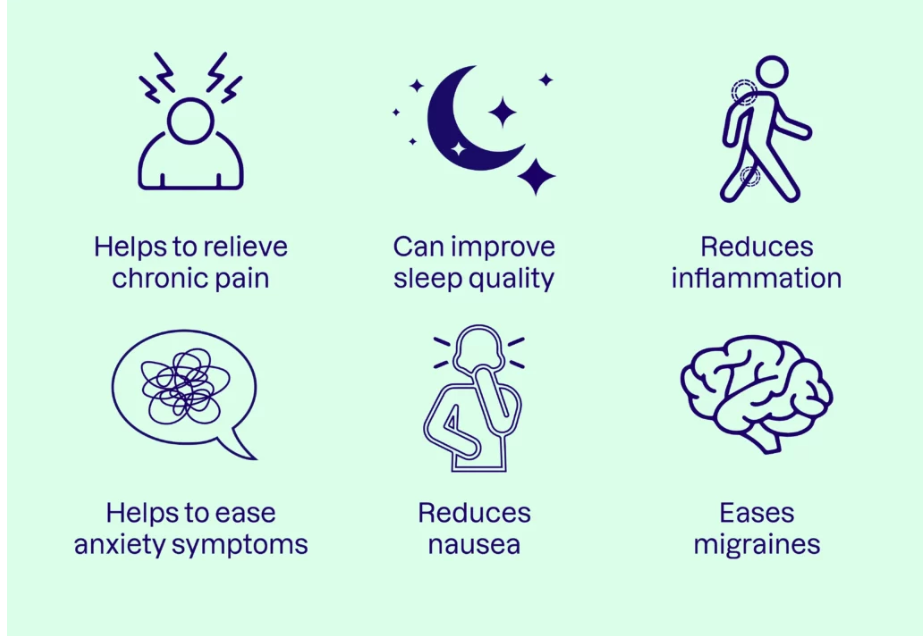
If you’re researching CBD for anxiety, you’ve probably noticed that the market is filled with oils, CBD flower, resin, gummies, capsules and other cannabinoid products — all making different claims about relaxation and stress relief.
But which CBD format is actually worth considering?
The answer depends on what you’re looking for. CBD oil, CBD flower and CBD resin are very different products, with differences in composition, testing, flavour, convenience and how they are typically used.
Research into CBD and anxiety is encouraging, but it is not yet strong enough to describe CBD as a proven treatment for anxiety disorders. A 2024 meta-analysis found potential benefits but highlighted the limited size of the clinical evidence, while a more recent review concluded that the current evidence remains low quality and limited.
This Sluggers Vapes guide explains how the main CBD formats compare, what to look for when evaluating a product and which factors matter most when choosing a quality CBD product. Browse CBD Flower Guide for more details.
CBD for Anxiety at a Glance
| CBD product | Main advantage | What to check |
|---|---|---|
| CBD Oil | Convenient and easy to measure | CBD concentration, ingredients and testing |
| CBD Flower | Whole-plant hemp profile | Cannabinoid content, THC levels and legality |
| CBD Resin | Concentrated hemp extract | Extraction method, cannabinoid profile and COA |
| CBD Isolate | Highly purified CBD | Purity and independent laboratory testing |
| Broad-Spectrum CBD | Multiple cannabinoids without intentionally added THC | Full cannabinoid profile |
| Full-Spectrum CBD | Wider hemp-derived cannabinoid profile | THC content and UK compliance |
The important point is that more CBD does not automatically mean a better product. Quality, consistency, transparency and independent testing can matter just as much as the headline CBD percentage.
What Is CBD?
CBD, or cannabidiol, is a cannabinoid found naturally in cannabis and hemp.
Unlike THC, CBD does not produce the characteristic intoxicating “high” associated with THC. However, CBD products can sometimes contain trace amounts of THC or other controlled cannabinoids depending on how they are manufactured.
CBD interacts with several biological systems rather than acting like a conventional pharmaceutical anxiety medication.
This is one reason researchers are interested in its potential effects on stress, anxiety and related conditions.
However, potential is not the same as proven treatment.
Current research includes laboratory studies, small clinical trials, observational studies and systematic reviews, with considerable variation between products, doses and study designs.
Does CBD Actually Help With Anxiety?
This is the most important question for anyone searching for CBD for anxiety.
The evidence is promising but not conclusive.
A 2024 meta-analysis investigating CBD for conditions including generalised anxiety disorder, social anxiety disorder and PTSD found evidence suggesting potential benefits, but the researchers cautioned that the clinical sample was limited and that more trials were needed.
Another systematic review published in 2024 found that studies had produced conflicting results and differed substantially in CBD formulations and amounts used. The authors concluded that additional, better-designed randomised controlled trials are required.
More recent evidence remains cautious. A 2025 review of cannabinoid formulations reported that the evidence for pharmaceutical-grade CBD in social anxiety and generalised anxiety was still low quality.
What does that mean for consumers?
CBD may be interesting for people researching natural approaches to relaxation, but it should not be marketed as a guaranteed cure for anxiety.
If anxiety is persistent, severe or interfering with everyday life, professional healthcare advice remains important.
Best CBD Oil for Anxiety
CBD oil is one of the most popular CBD formats because it is convenient and available in a range of formulations.
A CBD oil typically combines CBD extract with a carrier oil.
The CBD extract may be:
- CBD isolate
- Broad-spectrum CBD
- Full-spectrum hemp extract
What Makes a CBD Oil High Quality?
When comparing CBD oils, don’t focus exclusively on the number printed on the front of the bottle.
Instead, look at:
1. Independent laboratory testing
A reputable product should have accessible laboratory information showing what cannabinoids were detected.
A Certificate of Analysis, or COA, can help verify whether the product matches its label.
2. Clearly stated CBD content
The product should clearly explain how much CBD is present.
Avoid products where the CBD concentration is vague or difficult to determine.
3. THC information
This is particularly important in the UK.
CBD products may contain trace controlled cannabinoids, so consumers should not assume that a product labelled “CBD” automatically contains no THC. The Home Office explains that CBD products containing controlled cannabinoids can fall under controlled-drug legislation unless they meet the relevant exemption requirements.
4. Transparent ingredients
A quality CBD oil should make its ingredients easy to identify.
Look for clear information about:
- CBD extract
- Carrier oil
- Flavourings
- Other cannabinoids
- Botanical ingredients
The shorter and clearer the ingredient list, the easier it is to evaluate.
CBD Flower for Anxiety
CBD flower is hemp flower cultivated for its cannabinoid profile rather than high THC content.
Unlike CBD oil, flower retains more of the naturally occurring plant material.
This can make CBD flower attractive to consumers interested in a more traditional hemp profile.
However, CBD flower requires considerably more attention to legality and cannabinoid content.
UK industrial-hemp licences do not simply authorise the use of cannabis flowers or leaves. Government guidance states that industrial-hemp licences cover the seed and fibre and do not permit the use of the flowers or leaves as controlled material.
Therefore, consumers should not assume that a CBD flower product is automatically lawful simply because it is marketed as low-THC hemp.
What to Check With CBD Flower
If you’re evaluating CBD flower, check:
- CBD percentage
- THC content
- Cannabinoid profile
- Laboratory testing
- Product origin
- Batch information
- Legal status of the finished product
A high CBD percentage by itself does not establish that a product is compliant.
CBD Resin: Is It Better Than CBD Oil?
CBD resin is a concentrated hemp extract that can contain CBD alongside other naturally occurring cannabinoids and plant compounds.
It is different from CBD oil because the extract itself is more concentrated before being incorporated into a finished product.
Potential Advantages of CBD Resin
Consumers interested in CBD resin often look for:
- A concentrated hemp extract
- A richer botanical profile
- Higher cannabinoid concentration
- A more traditional extract format
- More complex flavour and aroma
However, concentration alone should not determine quality.
A highly concentrated product with poor testing or unclear cannabinoid content is not necessarily better than a lower-concentration product from a transparent manufacturer.
What to Look For
For CBD resin, pay particular attention to:
Cannabinoid profile:
What cannabinoids are actually present?
Extraction information:
Does the manufacturer explain how the extract was produced?
COA:
Does independent laboratory testing support the cannabinoid claims?
THC results:
Does the laboratory report clearly show THC and other controlled cannabinoids?
Contaminant testing:
Are pesticides, heavy metals, solvents and microbial contaminants addressed where relevant?
CBD Oil vs CBD Flower vs CBD Resin
If you’re deciding between the major CBD formats, the differences can be summarised simply.
| Feature | CBD Oil | CBD Flower | CBD Resin |
|---|---|---|---|
| Convenience | High | Lower | Moderate |
| Concentration | Varies | Naturally occurring | Usually concentrated |
| Product consistency | Usually high | Can vary between batches | Depends on extraction |
| Lab testing | Important | Essential | Essential |
| THC verification | Important | Particularly important | Particularly important |
| Whole-plant profile | Depends on extract | Yes | Often broader extract profile |
| UK regulatory considerations | Significant | Significant | Significant |
There is no universal “best CBD product for anxiety.”
The better question is:
Which format offers the transparency, quality and cannabinoid profile that best matches what you’re looking for?
Full-Spectrum vs Broad-Spectrum vs CBD Isolate
One of the biggest decisions when comparing CBD products is the type of CBD extract.
Full-Spectrum CBD
Full-spectrum extracts contain CBD alongside other naturally occurring hemp compounds.
Depending on the product, this can include other cannabinoids and trace THC.
For UK consumers, that makes cannabinoid and THC testing particularly important.
Broad-Spectrum CBD
Broad-spectrum products contain multiple hemp-derived compounds but are generally formulated to contain no intentionally added THC.
However, consumers should still examine the laboratory results rather than relying solely on marketing terminology.
CBD Isolate
CBD isolate is highly purified CBD.
It removes most other naturally occurring hemp compounds, leaving CBD as the primary cannabinoid.
For people who want a simpler cannabinoid profile, isolate can be appealing.
What Are the Best CBD Products for Anxiety?
Rather than choosing based solely on a product’s marketing claims, consider these characteristics.
Best CBD Oil
Look for:
- Clearly stated CBD concentration
- Independent COA
- Transparent ingredients
- Batch information
- Clearly disclosed THC results
- Reputable manufacturing standards
Best CBD Flower
Look for:
- Clear cannabinoid testing
- Verified THC results
- Batch-specific laboratory information
- Transparent hemp origin
- No exaggerated medical claims
Best CBD Resin
Look for:
- Detailed cannabinoid profile
- Extraction information
- Independent laboratory testing
- Contaminant screening
- Transparent THC information
In every category, testing and transparency should come before flashy packaging or extremely high CBD percentages.
Why COAs Matter When Buying CBD
A Certificate of Analysis is one of the most useful documents consumers can look for.
A COA can provide laboratory information about a particular batch of product.
Depending on the laboratory and testing panel, it may show:
- CBD concentration
- THC concentration
- Other cannabinoids
- Heavy metals
- Pesticides
- Residual solvents
- Microbial contamination
This is especially important because CBD products can vary substantially in composition.
The FSA maintains a register of CBD products linked to novel-food applications and states that CBD food products are novel foods requiring authorisation before they are placed on the market.
A COA Should Match the Product
One common mistake is assuming that any laboratory certificate proves the quality of a product.
Ideally, the testing information should be clearly connected to:
- The manufacturer
- The product
- The batch
- The laboratory
- The testing date
A generic certificate that cannot be connected to the product you’re considering provides much less useful information.
CBD for Anxiety: Marketing Claims to Be Careful With
CBD marketing can sometimes go much further than the scientific evidence.
Be cautious about products claiming that CBD:
- Cures anxiety
- Eliminates panic attacks
- Treats depression
- Replaces prescription anxiety medication
- Guarantees better sleep
- Works for everyone
- Has no side effects
The existing evidence does not justify making universal claims like these.
Research suggests CBD may have anxiolytic potential, but researchers continue to highlight the need for larger, better-controlled clinical trials.
CBD vs THC for Anxiety
CBD and THC should not be treated as interchangeable cannabinoids.
CBD is not intoxicating in the same way THC is, whereas THC is responsible for the classic psychoactive effects associated with cannabis.
This distinction matters particularly for people researching CBD for anxiety.
Adding THC to a cannabinoid product does not automatically make it a better anxiety product.
In fact, cannabis and anxiety have a complicated relationship, and research has identified potential mental-health risks associated with cannabis exposure, particularly with higher-potency products.
For someone specifically researching CBD for anxiety, a transparent CBD-focused product may therefore be a more relevant category to investigate than a high-THC cannabis product.
Is CBD Legal in the UK?
CBD itself is not simply treated as equivalent to THC under UK drug law.
However, the finished product matters.
The Home Office explains that CBD products containing controlled cannabinoids can be controlled drugs unless they qualify for the relevant exemption.
There are also separate food and novel-food rules.
The FSA’s current CBD register explains that CBD food products are novel foods and require authorisation following safety assessment.
This means UK consumers should avoid the assumption that:
“It’s hemp-derived, therefore it’s automatically legal.”
The legality depends on the specific product, its ingredients, cannabinoid content and how it is supplied.
CBD and Natural Anxiety Relief
The phrase “natural relief” is popular in CBD marketing, but natural does not automatically mean risk-free or medically effective.
Anxiety can have many causes, and effective management may involve approaches such as psychological therapies, lifestyle changes and, where appropriate, conventional medical treatment.
For example, the NHS identifies cognitive behavioural therapy (CBT) as a recommended treatment for several anxiety-related conditions.
CBD can therefore be viewed as an area of ongoing research rather than a guaranteed replacement for established anxiety treatments.
How to Choose a CBD Product for Anxiety
If you’re comparing products commercially, use this checklist.
Step 1: Decide on the format
Choose between:
- CBD oil
- CBD flower
- CBD resin
- CBD isolate
- Broad-spectrum CBD
Step 2: Check the cannabinoid profile
Don’t rely only on the CBD number.
Look at the complete cannabinoid analysis.
Step 3: Check the THC result
This is particularly important for UK consumers.
Step 4: Find the COA
Look for batch-specific independent laboratory testing.
Step 5: Check the ingredients
Avoid products where the ingredients or cannabinoid quantities are unclear.
Step 6: Investigate the manufacturer
Look for transparency about manufacturing, testing and sourcing.
Step 7: Question medical claims
A product promising to “cure” anxiety should be treated cautiously.
Best CBD for Anxiety: What Matters Most?
The best CBD product isn’t necessarily the one with the highest CBD percentage, the strongest marketing or the most expensive packaging.
Instead, look for verified composition, independent testing, transparent ingredients and responsible claims.
For CBD oil, convenience and clear labelling are major advantages.
For CBD flower, cannabinoid and THC testing are especially important.
For CBD resin, extraction quality and the full cannabinoid profile deserve closer attention.
And regardless of format, a trustworthy COA is one of the most useful tools available when comparing products.
Frequently Asked Questions
Does CBD help with anxiety?
Research suggests CBD may have anxiolytic potential, but clinical evidence remains limited and inconsistent. More high-quality research is required before CBD can be considered a proven treatment for anxiety disorders.
What is better for anxiety, CBD oil or CBD flower?
Neither can be universally described as better. CBD oil is generally easier to evaluate for concentration and ingredients, while CBD flower provides a different hemp-based product format. Product quality and laboratory testing are more important than the format alone.
Is CBD resin stronger than CBD oil?
CBD resin can be a more concentrated extract, but concentration does not automatically mean better quality or better results.
Does CBD make you high?
CBD itself is not intoxicating in the same way THC is. However, some CBD products may contain THC or other controlled cannabinoids, which is why laboratory testing matters.
Can CBD replace anxiety medication?
CBD should not automatically be viewed as a replacement for prescribed anxiety medication. Anyone considering changing prescribed treatment should speak with their healthcare professional.
What should I look for in a CBD COA?
Look for the product or batch identification, cannabinoid concentrations, THC results, laboratory details and, where relevant, contaminant testing.
Is CBD flower legal in the UK?
Don’t assume that CBD flower is automatically legal because it contains low levels of THC. UK industrial-hemp licensing does not simply authorise the use of flowers or leaves, and finished products must be assessed against applicable controlled-drug and other regulatory requirements.
Final Verdict: What’s the Best CBD for Anxiety?
CBD is an increasingly researched cannabinoid for anxiety, but the science is still developing.
Current evidence suggests CBD may have potential for reducing anxiety symptoms, yet researchers continue to highlight limitations in clinical trials, product formulations and study quality.
For consumers comparing products, the most important factors are not simply whether a bottle says “high strength” or “premium.”
Look for:
- Transparent cannabinoid content
- Independent laboratory testing
- Clear THC information
- Reliable batch information
- Transparent ingredients
- Responsible marketing claims
- Appropriate UK regulatory compliance
Whether you choose to research CBD oil, CBD flower or CBD resin, the smartest approach is to evaluate the product’s evidence and documentation rather than relying on anxiety-relief claims alone.
CBD may be a promising area of cannabinoid research, but quality, transparency and realistic expectations matter more than marketing hype
Suggested internal links:
- What Is CBD?
- CBD vs THC
- CBD vs CBN
- Full-Spectrum vs Broad-Spectrum CBD
- CBD COA Guide
- How to Read a CBD Lab Report
- CBD Flower Guide
- CBD Oil Guide
- CBD Resin Explained
- UK CBD Laws 2026
- CBD vs THC for Anxiety
- Cannabis Cannabinoids Explained