
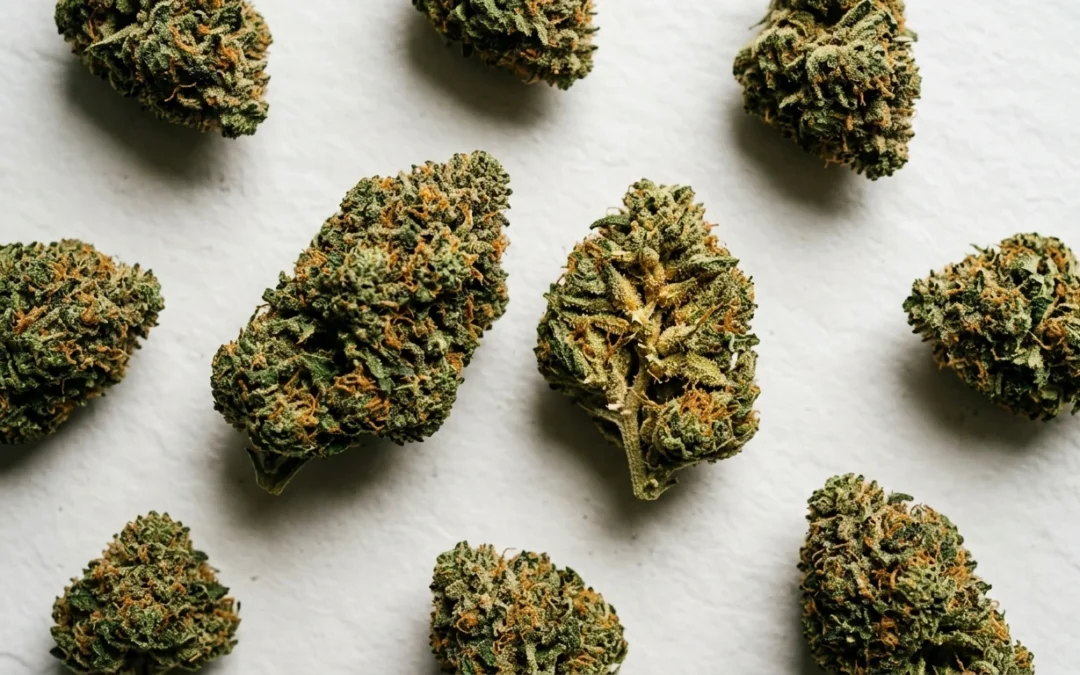
CBD flower UK searches have grown as consumers look for hemp-derived products containing cannabidiol in a more natural plant format.
Unlike CBD oils, capsules or isolates, CBD flower refers to the flowering part of a hemp or cannabis plant that contains naturally occurring cannabinoids, terpenes and other plant compounds.
However, CBD flower is a particularly important product to understand from a UK legal perspective. Simply calling a cannabis flower product “CBD flower” or stating that it contains less than 0.2% THC does not automatically make the flower legal to possess or sell in the UK. Current Home Office guidance says its industrial-hemp cultivation policy covers the non-controlled parts of the plant, such as seed and fibre, and does not permit the use of flowers or leaves under that policy.
This Sluggers Carts guide explains what CBD flower is, how it differs from THC flower, what to look for when evaluating quality, how COAs work, the importance of cannabinoids and terpenes, and what UK consumers should know about the current regulatory position. Read CBD for Anxiety Complete Guide.
What Is CBD Flower?
CBD flower is the flowering material of a cannabis or hemp plant that contains cannabidiol (CBD) and other naturally occurring plant compounds.
CBD itself is different from THC.
CBD, or cannabidiol, is generally considered non-intoxicating, while THC is the cannabinoid primarily associated with cannabis intoxication.
CBD flower can naturally contain:
- CBD
- CBDA
- CBG
- CBC
- Terpenes
- Flavonoids
- Other naturally occurring plant compounds
- Potentially THC or other controlled cannabinoids
The exact cannabinoid profile depends on the genetics, cultivation method, harvesting process and processing of the plant.
CBD Flower vs THC Flower
The biggest difference is the cannabinoid profile.
| Feature | CBD Flower | THC Flower |
|---|---|---|
| Main cannabinoid | CBD | THC |
| Intoxicating effect | CBD itself is not intoxicating | THC is intoxicating |
| Typical consumer interest | CBD and hemp compounds | THC effects |
| Terpenes | Can be naturally present | Can be naturally present |
| UK legal considerations | Complex | Controlled cannabis |
| COA important? | Yes | Yes |
It is important not to assume that a product labelled “CBD flower” contains no THC.
Cannabis-derived products can contain controlled cannabinoids, and the Home Office specifically states that consumer CBD products can contain controlled cannabinoids such as THC.
What Is the Difference Between CBD Flower and Hemp?
The terms CBD flower and hemp are sometimes used interchangeably in marketing, but they are not exactly the same thing.
“Hemp” generally refers to cannabis varieties cultivated for particular industrial or cannabinoid-related purposes.
“CBD flower” is a consumer-facing description generally used for flowering cannabis material marketed because of its CBD content.
The distinction becomes particularly important in the UK because the Home Office industrial-hemp licensing policy is specifically limited to particular uses of non-controlled plant parts.
Current guidance states that industrial hemp licences cover the use of seed and fibre, while flowers and leaves are controlled plant material outside that policy.
Is CBD Flower Legal in the UK?
This is one of the most important questions for anyone searching for CBD flower UK.
The short answer: don’t assume it is legal simply because it contains low THC.
UK law does not create a general rule that cannabis flower becomes legal merely because its THC level is below 0.2%.
The Home Office states that cannabis is a Class B controlled drug and that its industrial-hemp policy is limited to non-controlled parts such as seed and fibre. It specifically says the policy does not allow the use of flowers or leaves.
The Home Office also states that the controlled parts of the plant, including flowers and leaves, remain controlled regardless of their THC content.
This means consumers should be extremely cautious with websites claiming that all “under 0.2% THC CBD flower” is automatically legal in the UK.
Why Does the 0.2% THC Figure Cause Confusion?
The 0.2% figure is frequently used in hemp marketing.
However, the Home Office explains that this figure is used to identify varieties that may potentially be cultivated under the industrial-hemp policy. It does not create a general exemption allowing consumers to possess or sell cannabis flowers containing less than 0.2% THC.
This distinction is crucial.
Low THC does not automatically mean legally unrestricted flower.
CBD Flower and UK Novel Food Rules
Another source of confusion is the UK’s CBD novel-food framework.
The Food Standards Agency states that CBD extracts, isolates and associated food products are subject to the novel-food authorisation framework in Great Britain.
However, this should not be interpreted as an approval system for recreational CBD flower.
The food-law framework and controlled-drug framework are separate regulatory questions.
A product can therefore raise issues under both food regulations and drugs legislation, depending on what it is, how it is marketed and how it is supplied.
The FSA’s CBD register contains products linked to novel-food applications, but inclusion on the register should not be treated as a blanket statement that every CBD-derived product is authorised for every possible use.
Does CBD Flower Get You High?
CBD itself is not considered intoxicating in the same way as THC.
However, a flower product can contain multiple cannabinoids.
That means you should not determine whether a product is intoxicating simply from the word “CBD” appearing on the label.
A credible cannabinoid profile should show what the product actually contains.
Look for laboratory information showing:
- CBD
- CBDA
- THC
- THCA
- CBG
- CBC
- Other relevant cannabinoids
The exact testing panel will vary between laboratories.
CBD Flower and THC Content
THC content is particularly important when evaluating hemp-derived products.
A product marketed as “THC-free” should ideally have laboratory evidence supporting that claim.
Similarly, a product advertised as containing only trace cannabinoids should have testing that demonstrates its cannabinoid profile.
This is one reason a Certificate of Analysis (COA) can be more useful than marketing language alone.
What Is a CBD Flower COA?
A Certificate of Analysis, or COA, is a laboratory report showing the results of testing performed on a particular product or batch.
A useful CBD flower COA can provide information about:
- CBD concentration
- THC concentration
- Other cannabinoids
- Pesticides
- Heavy metals
- Microbial contamination
- Mycotoxins
- Residual solvents where relevant
Not every laboratory report tests for every category.
The important point is that consumers should look beyond a simple statement saying “lab tested.”
How to Read a CBD Flower COA
When reviewing a COA, check the following.
1. Batch Number
The COA should correspond to the batch you’re buying.
A generic laboratory report from an unrelated batch is much less useful.
2. Testing Date
Look for the date on which the sample was tested.
3. Laboratory Identification
The report should identify the laboratory responsible for the analysis.
4. Cannabinoid Profile
Look for individual cannabinoid results rather than a vague “CBD content” statement.
5. THC Result
Pay particular attention to THC and related cannabinoid results because of the UK’s controlled-drug framework.
6. Contaminant Testing
Where applicable, check whether the product was tested for pesticides, heavy metals, microbial contamination and other contaminants.
What Makes High-Quality CBD Flower?
Quality isn’t determined by CBD percentage alone.
A high-quality product should be evaluated across several areas.
Cannabinoid Profile
The cannabinoid profile should be clear and supported by testing.
Terpene Profile
Terpenes contribute to the plant’s aroma and flavour characteristics.
Common cannabis terpenes include:
- Myrcene
- Limonene
- Caryophyllene
- Pinene
- Linalool
- Terpinolene
A detailed terpene profile can provide more useful information than simply describing a product as “strong” or “premium.”
Appearance
CBD flower can vary considerably in appearance.
Consumers may look at:
- Colour
- Trichome development
- Bud structure
- Trim quality
- Visible contamination
- Excessive stems or seeds
Appearance alone, however, cannot prove cannabinoid content or safety.
Aroma
Terpenes can create distinctive aromas ranging from citrus and floral notes to earthy, herbal or spicy profiles.
A strong aroma does not automatically mean higher CBD content.
CBD Flower Strains and Cultivars
CBD flower is often marketed using strain or cultivar names.
These names can be useful for distinguishing product profiles, but consumers should not assume that a strain name guarantees a particular cannabinoid or terpene composition.
Two products using similar cultivar names can have different:
- CBD levels
- THC levels
- Minor cannabinoids
- Terpene profiles
- Growing conditions
- Harvest dates
- Processing methods
This is another reason batch-specific laboratory testing is valuable.
Indoor vs Outdoor CBD Flower
CBD flower may be grown indoors, outdoors or in controlled greenhouse environments.
Indoor-Grown CBD Flower
Indoor cultivation allows growers greater control over environmental conditions.
Potential advantages include:
- Controlled temperature
- Controlled humidity
- Controlled lighting
- Consistent growing conditions
Outdoor-Grown CBD Flower
Outdoor cultivation uses natural sunlight and environmental conditions.
The resulting flower can have a different appearance and terpene profile depending on the cultivar and growing environment.
Greenhouse-Grown CBD Flower
Greenhouse cultivation sits between indoor and outdoor production, using a controlled structure while taking advantage of natural light.
There is no universal rule that indoor flower is automatically superior to outdoor flower.
Quality depends on cultivation, genetics, harvesting, drying, storage and testing.
CBD Flower vs CBD Oil
CBD flower and CBD oil are very different product formats.
| Feature | CBD Flower | CBD Oil |
|---|---|---|
| Format | Plant material | Liquid extract |
| Cannabinoids | Naturally occurring plant profile | Extracted cannabinoid profile |
| Terpenes | Naturally present depending on product | May be retained or added |
| COA | Important | Important |
| UK regulatory considerations | Particularly complex | Depends on product and intended use |
| Convenience | Depends on intended use | Generally convenient |
For UK consumers, it is important not to assume that rules applying to one CBD product automatically apply to another.
CBD Flower vs CBD Isolate
CBD isolate is highly purified CBD rather than whole plant material.
A CBD flower contains a broader mixture of naturally occurring plant compounds.
| CBD Flower | CBD Isolate | |
|---|---|---|
| Plant material | Yes | No |
| CBD | Present | Highly purified |
| Terpenes | Naturally present | Generally absent unless added |
| Minor cannabinoids | May be present | Minimal |
| Appearance | Flower buds | Powder/crystalline material |
The FSA has evaluated CBD isolate as a novel food ingredient, including highly purified CBD preparations.
CBD Flower vs Full-Spectrum CBD
The terms can sound similar but describe different formats.
CBD flower is the plant material itself.
Full-spectrum CBD generally refers to an extract containing CBD alongside other naturally occurring cannabis compounds.
A full-spectrum oil, for example, is not the same product as a CBD flower.
Does CBD Flower Have Terpenes?
Yes, naturally grown cannabis flower can contain terpenes.
Terpenes are aromatic compounds found throughout many plants.
In cannabis, they contribute to:
- Aroma
- Flavour
- Plant characteristics
- Cultivar profiles
Examples include limonene, myrcene, pinene and caryophyllene.
However, consumers should be careful with claims that specific terpene combinations guarantee particular medical or psychological effects.
A terpene profile can describe a product without proving a therapeutic outcome.
How to Choose CBD Flower
If you’re researching CBD flower, consider these factors before making a decision.
1. Check the Legal Status
This should come before product selection in the UK.
Do not rely solely on a seller’s claim that low THC automatically makes flower legal.
2. Look for Batch-Specific Testing
Prefer products supported by laboratory documentation corresponding to the relevant batch.
3. Check THC Results
THC is particularly important because of its controlled status under UK drugs legislation.
4. Check Contaminant Testing
Look for appropriate testing covering contaminants such as pesticides, heavy metals and microbial hazards.
5. Review the Cannabinoid Profile
Don’t judge quality solely from the advertised CBD percentage.
6. Examine the Packaging
Packaging should protect the flower from excessive moisture, heat and contamination.
7. Avoid Unsupported Medical Claims
Be cautious when a seller claims CBD flower can treat anxiety, pain, insomnia or other medical conditions.
Marketing language isn’t the same thing as clinical evidence.
CBD Flower Storage
If you are legally able to possess a particular product, appropriate storage helps maintain product quality.
Keep it:
- Away from direct sunlight
- Away from excessive heat
- Away from excessive moisture
- In suitable sealed packaging
- Away from children and pets
Avoid exposing flower to unnecessary environmental fluctuations.
Common CBD Flower Buying Mistakes
Mistake 1: Assuming “0.2% THC” Means Automatically Legal
This is one of the biggest UK CBD flower misconceptions.
The Home Office explicitly states that the 0.2% figure does not create a general exemption for cannabis flowers.
Mistake 2: Buying Without a COA
A label alone doesn’t independently verify cannabinoid content.
Mistake 3: Choosing Based Only on CBD Percentage
A higher advertised CBD percentage does not automatically mean a better product.
Mistake 4: Ignoring Batch Information
A laboratory report should ideally correspond to the product or batch being sold.
Mistake 5: Trusting Medical Claims
CBD products should not automatically be treated as medicines simply because a retailer describes them as providing a therapeutic benefit.
Is CBD Flower Better Than CBD Oil?
There isn’t a universal answer.
CBD flower and CBD oil are different formats designed around different consumer preferences.
Flower may appeal to people interested in the natural plant material and its broader cannabinoid and terpene profile.
Oil may appeal to people looking for a more conventional CBD format.
For UK consumers, however, the legal and regulatory status of the specific product should come before comparisons based on convenience or preference.
CBD Flower UK: What Consumers Should Check
Before considering any CBD flower product, ask:
Is the product legally permitted?
Does the seller provide credible laboratory testing?
Does the COA correspond to the batch?
Does the COA identify THC and other cannabinoids?
Has the product been tested for relevant contaminants?
Are the seller’s claims supported by evidence?
Is the product being marketed as a food, cosmetic, smoking product or something else?
These questions are more useful than simply looking for the highest advertised CBD percentage.
Frequently Asked Questions
What is CBD flower?
CBD flower is cannabis or hemp flower marketed primarily for its CBD content and naturally occurring plant compounds.
Is CBD flower the same as THC flower?
No. CBD flower is marketed around CBD and generally has much lower THC levels, while THC flower contains THC at levels capable of producing intoxication.
Does CBD flower contain THC?
It can. Cannabis plants naturally contain multiple cannabinoids, and the actual cannabinoid profile depends on the plant and product.
Does CBD flower get you high?
CBD itself is not intoxicating like THC. However, products can contain other cannabinoids, including THC, so the actual composition matters.
Is CBD flower legal in the UK?
The legal position is more complicated than simply checking whether THC is below 0.2%. Current Home Office guidance says its industrial-hemp policy does not cover flowers or leaves, which remain controlled plant material.
Is CBD itself a controlled drug?
Pure CBD is not controlled under the Misuse of Drugs Act 1971, but CBD products can contain controlled cannabinoids such as THC, meaning the legal status depends on the specific preparation or product.
What is a CBD COA?
A COA, or Certificate of Analysis, is laboratory documentation showing testing results for a particular product or batch.
What should a CBD flower COA show?
Ideally, it should provide cannabinoid results and relevant safety testing, with clear laboratory and batch information.
Is a higher CBD percentage better?
Not necessarily. Product quality depends on cannabinoid accuracy, contamination testing, cultivation, storage, manufacturing and regulatory compliance.
Final Verdict: CBD Flower UK
CBD flower is a distinctive cannabinoid product because it contains the plant’s natural flower material rather than an isolated CBD ingredient or conventional oil.
For consumers, the most important considerations are product composition, laboratory testing, THC content, contaminants, batch information and regulatory status.
The biggest misconception in the UK is that a cannabis flower automatically becomes legal because it contains less than 0.2% THC. Current Home Office guidance makes clear that its industrial-hemp policy is limited to seed and fibre and does not permit the use of flowers or leaves under that regime.
Therefore, anyone researching CBD flower UK should look beyond marketing claims and understand the distinction between CBD itself, hemp cultivation rules, controlled cannabis material and the separate novel-food framework.
Suggested Internal Links:
- CBD for Anxiety
- CBD for Focus
- How Lab Testing Ensures CBD Product Safety
- CBD COA Guide
- How to Read a CBD Lab Report
- CBD vs THC
- CBD Oil Guide
- CBD Resin Explained
- Full-Spectrum vs Broad-Spectrum CBD
- CBD Isolate Explained
- UK CBD Laws 2026
- CBD Product Safety Guide
- Best CBD Products UK
Suggested CTA:
Explore our CBD guides to compare flower, oils, extracts and other CBD formats while learning how to evaluate laboratory testing, cannabinoid profiles and product quality.