
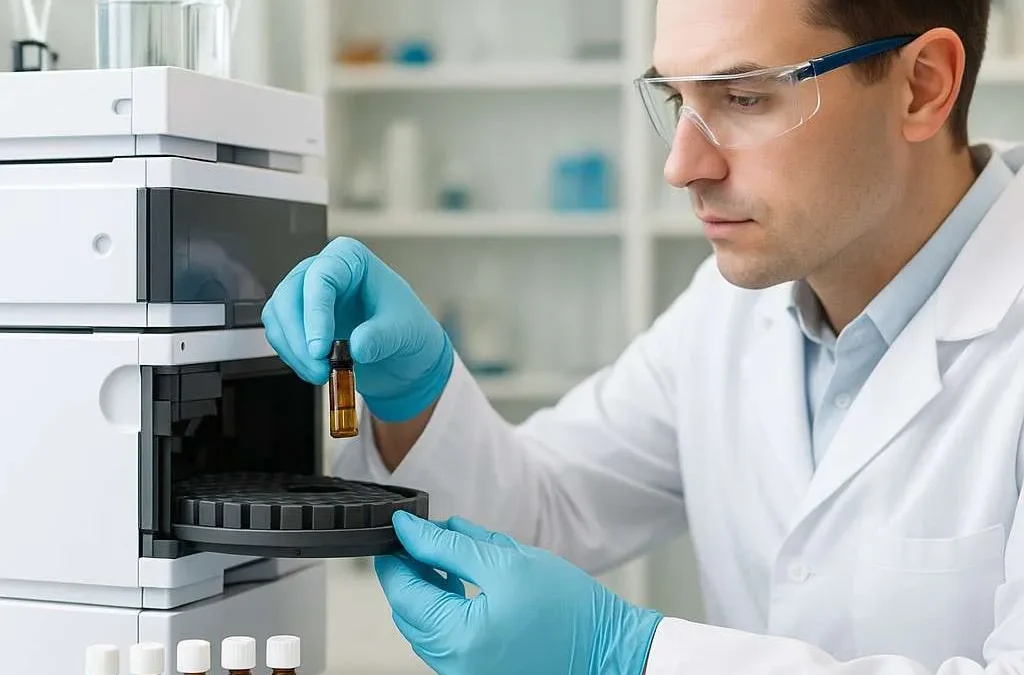
When shopping for cannabis products online, one of the most important things to look for is THC lab testing.
Lab testing can provide information about the cannabinoid profile, potency, contaminants and other characteristics of a cannabis-derived product. For customers comparing THC vapes, THC flower, concentrates and pre-rolls, a Certificate of Analysis (COA) can provide useful information that cannot be determined from packaging or product appearance alone.
For UK consumers, understanding what laboratory testing actually measures is particularly important. UK government guidance recognises that cannabinoid analysis can be technically challenging, especially when laboratories need to identify controlled cannabinoids at very low concentrations.
This guide explains what THC lab testing means, what a COA should contain, which contaminants laboratories may test for and what customers should look for before buying cannabis products online.
What Is THC Lab Testing?
THC lab testing is the laboratory analysis of a cannabis or cannabinoid product to determine its chemical composition and identify specific compounds or contaminants.
Depending on the product and laboratory, testing may examine:
- Cannabinoid content
- THC and related cannabinoids
- CBD and other cannabinoids
- Cannabinoid potency
- Residual solvents
- Heavy metals
- Pesticides
- Microbial contamination
- Mycotoxins
- Terpene profiles
- Other product-specific characteristics
The exact testing panel varies between products and laboratories.
A vape cartridge, for example, may require different analytical considerations from dried flower or a concentrate.
What Is a Certificate of Analysis (COA)?
A Certificate of Analysis, commonly called a COA, is a laboratory report containing the analytical results for a particular sample.
A useful COA should allow you to identify what was tested and understand the laboratory’s findings.
Depending on the laboratory, a COA may include:
- Product or sample name
- Batch or lot number
- Sample identification
- Testing date
- Laboratory information
- Testing methods
- Cannabinoid results
- Contaminant results
- Detection or reporting limits
- Pass/fail information where applicable
- Laboratory accreditation information
A COA is most useful when it can be connected to the specific product or batch you are considering.
Why Is THC Lab Testing Important?
Laboratory analysis provides information that cannot reliably be determined simply by looking at a product.
For example, the appearance of cannabis flower does not tell you its precise cannabinoid concentration. Similarly, a vape cartridge’s appearance does not establish its complete chemical composition.
Testing can therefore provide additional transparency around:
Cannabinoid profile
What cannabinoids were identified and measured?
Potency
What concentration of particular cannabinoids was detected?
Contaminants
Were substances such as pesticides, heavy metals or residual solvents included in the testing panel?
Batch information
Does the laboratory report correspond to the product or batch being sold?
For customers comparing products, these details can make laboratory documentation much more useful than a generic marketing claim such as “lab tested.”
What Cannabinoids Are Tested?
A cannabinoid panel can include several naturally occurring or formulated cannabinoids.
Depending on the product, testing may include:
- Δ9-THC
- THCA
- CBD
- CBDA
- CBG
- CBGA
- CBC
- CBN
- THCV
- Other cannabinoids relevant to the sample
The exact panel varies.
UK government information also highlights the analytical importance of accurately measuring controlled cannabinoids and their precursor acids. THCA is particularly relevant because it can convert to THC when exposed to heat.
This is one reason customers should look beyond a single headline potency number when reviewing cannabis laboratory documentation.
THC vs THCA on a Lab Report
One common point of confusion is the difference between THC and THCA.
THCA is the acidic precursor associated with THC in raw cannabis. When exposed to heat, THCA can undergo decarboxylation and form THC.
As a result, a laboratory report may list THC and THCA separately.
If you see both compounds on a COA, don’t automatically assume the numbers are interchangeable. The laboratory’s methodology and reporting conventions matter.
UK government guidance specifically notes that THCA can convert to THC with heat, which is relevant when interpreting cannabinoid analysis.
What Does a Potency Test Tell You?
A potency test measures the concentration of specified cannabinoids in a sample.
For example, a cannabinoid analysis might report the percentage or concentration of:
- THC
- THCA
- CBD
- CBG
- CBN
- Other tested cannabinoids
However, a higher reported cannabinoid percentage does not automatically mean a product is better.
When comparing THC vapes UK, THC flower UK or concentrates, laboratory results should be considered alongside product information, batch details, manufacturing information and the applicable legal requirements.
What Contaminants Can Cannabis Labs Test For?
Cannabis laboratory testing can involve much more than cannabinoid potency.
Depending on the product and testing package, laboratories may analyse for potentially unwanted substances such as:
Pesticides
Testing can identify specified pesticide residues that may remain from cultivation or processing.
Heavy Metals
Testing may examine metals such as lead, arsenic, cadmium and mercury.
Residual Solvents
Some extraction processes use solvents. Laboratory analysis can determine whether specified residual solvents are present and at what levels.
Microbial Contamination
Some testing panels examine microorganisms such as mould, yeast and bacteria.
Mycotoxins
Certain laboratories may also test for mycotoxins associated with fungal contamination.
The exact contaminants tested depend on the laboratory, product type and testing package.
What Does “Lab Tested” Actually Mean?
The phrase “lab tested” by itself doesn’t tell you very much.
A stronger form of laboratory transparency provides information about:
- What was tested
- Which laboratory performed the analysis
- When the sample was tested
- Which batch was tested
- Which analytical methods were used
- Which cannabinoids were detected
- Which contaminants were included
- Whether the laboratory is appropriately accredited
UK government guidance emphasises the importance of appropriate analytical methods and notes that laboratories assessing cannabinoid compliance should have suitable accreditation.
Therefore, customers should look for actual laboratory documentation rather than relying solely on a badge or statement saying “tested.”
What Is ISO 17025?
ISO/IEC 17025 is an international standard covering competence requirements for testing and calibration laboratories.
For cannabis-related analytical work, laboratory accreditation can provide additional information about the laboratory’s competence and quality systems.
The UK Home Office guidance specifically refers to ISO/IEC 17025 accreditation for relevant analytical methods when testing is required to demonstrate compliance with its stated criteria.
This doesn’t mean that every document labelled “COA” is automatically reliable simply because it exists. The laboratory, testing method, sample identification and scope of accreditation all matter.
How to Read a THC COA
When reviewing a COA, work through it systematically.
1. Check the Product Name
Does the product or sample name match the product you’re considering?
2. Check the Batch Number
A batch or lot number can help establish whether the report corresponds to the product being sold.
3. Check the Testing Date
Look at when the sample was analysed.
4. Check the Laboratory
Identify the laboratory that performed the testing.
5. Check the Testing Panel
Find out exactly what the laboratory tested.
A cannabinoid-only report is different from a comprehensive report that also examines contaminants.
6. Check the Results
Review the reported cannabinoid concentrations and any contaminant findings.
7. Check the Methodology
Look for information about the analytical method used.
Government research has highlighted that cannabinoid analysis can require sensitive analytical techniques and that different product matrices can create testing challenges.
THC Lab Testing for Vapes
THC vape lab testing can be particularly important because vape products may contain oils, extracts, terpenes and other ingredients.
A useful testing approach can examine the cannabinoid composition and, depending on the product and laboratory, other potential contaminants.
When comparing THC disposable vapes or cartridges, consider asking:
- Is there a batch-specific COA?
- Does the sample name match the product?
- Are cannabinoids listed?
- Are relevant contaminants included?
- Is the laboratory identified?
- Are testing methods disclosed?
- Is accreditation information available?
For customers browsing Sluggers disposable vapes, product-specific laboratory documentation can provide additional information when available.
THC Flower Lab Testing
For THC flower, laboratory testing can provide information about:
- Cannabinoid profile
- Cannabinoid concentration
- Terpenes
- Pesticide screening
- Heavy-metal screening
- Microbial testing
- Mycotoxin testing
A flower’s appearance, aroma and packaging alone cannot establish its complete chemical profile.
If you are comparing different flower products, a batch-specific laboratory report can therefore be useful additional information.
THC Concentrate Lab Testing
Concentrates can contain significantly different cannabinoid and terpene profiles from flower.
Testing may provide information about:
- Cannabinoid concentration
- Terpene content
- Residual solvents
- Heavy metals
- Pesticides
- Other contaminants
This is especially relevant when comparing products such as live resin, sauce, badder or other concentrate formats.
You can explore our Sluggers Concentrate collection to compare available products.
How to Spot a Weak or Incomplete COA
Not every laboratory report provides the same level of information.
Be cautious when a COA:
- Has no laboratory name
- Has no testing date
- Has no sample identification
- Has no batch number
- Does not identify the testing methods
- Shows only a marketing headline
- Provides no actual analytical results
- Appears unrelated to the product being sold
A generic laboratory report covering an unidentified sample provides less useful information than a report clearly tied to a specific batch.
Does THC Lab Testing Mean a THC Product Is Legal?
No.
Laboratory testing and legal status are separate questions.
A laboratory report can provide analytical information about a product, but the existence of a COA does not automatically establish that a product can legally be sold, possessed or supplied in the UK.
UK cannabinoid laws can depend on the product, cannabinoid composition, applicable exemptions, intended use and other factors. The Home Office states that products containing controlled cannabinoids can be subject to the Misuse of Drugs Act and related regulations.
For that reason, avoid treating “lab tested” as equivalent to “legal.”
Does THC Lab Testing Mean a Product Is Safe?
Not necessarily.
Testing can provide useful information about the characteristics of a sample and whether specified substances were detected, but a COA should not be interpreted as a guarantee of safety or suitability for every person.
The scope of the testing matters.
For example, a report showing cannabinoid potency does not necessarily mean the product was screened for pesticides, heavy metals, microbial contamination or residual solvents.
Always check what the laboratory actually tested.
What Should UK Customers Look For?
When comparing cannabis products online, a practical laboratory-testing checklist is:
✓ Batch-specific documentation
The COA should relate to the product or batch where possible.
✓ Identifiable laboratory
The testing laboratory should be clearly named.
✓ Cannabinoid analysis
Look for actual cannabinoid results rather than a generic potency claim.
✓ Relevant contaminant screening
Check whether the testing panel covers contaminants relevant to the product.
✓ Testing date
Know when the sample was analysed.
✓ Testing methodology
Look for information about the analytical method.
✓ Accreditation information
Where applicable, check the laboratory’s accreditation and scope.
Shop THC Products With Greater Transparency
Laboratory testing should be part of a broader product-information strategy rather than the only factor used when comparing cannabis products.
If you’re shopping for THC vapes UK, look at the product information, available laboratory documentation, batch information and delivery details before making a purchase.
You can explore the Sluggers Disposable Vape range or browse our THC Flower collection to compare available products.
For customers who want to understand cannabis products in greater detail, our THC & Cannabis Guides UK hub provides additional educational information.
Frequently Asked Questions About THC Lab Testing
What is a THC lab test?
A THC lab test is laboratory analysis used to identify and quantify THC and potentially other cannabinoids or contaminants in a cannabis-related sample.
What is a COA?
A COA, or Certificate of Analysis, is a laboratory report showing analytical results for a particular sample.
What should a cannabis COA include?
Depending on the test, it may include the sample name, batch number, testing date, laboratory details, analytical methods, cannabinoid results and contaminant results.
Is a COA proof that a THC vape is legal in the UK?
No. A COA provides analytical information. It does not independently determine the legal status of a product.
Is ISO 17025 important for cannabis testing?
It can be important when assessing laboratory competence and analytical quality. UK government guidance specifically refers to ISO/IEC 17025 accreditation in the context of relevant cannabinoid testing.
Does a higher THC result mean a better product?
Not necessarily. Potency is only one characteristic of a cannabis product. Other factors include cannabinoid profile, terpene profile, product formulation, testing coverage and batch information.
Final Thoughts On THC Lab Testing
THC lab testing gives customers a way to look beyond product descriptions and examine analytical information about a particular sample.
When comparing THC vapes, flower or concentrates in the UK, look for meaningful laboratory documentation rather than relying solely on the phrase “lab tested.”
A useful COA should identify the sample and laboratory and provide actual analytical results. Where relevant, customers should also examine the testing panel, methodology, contaminant screening and accreditation information.
Most importantly, remember that laboratory testing, product quality and legal status are separate considerations.
For UK cannabinoid products, current government guidance should always be considered alongside laboratory documentation and retailer information.