
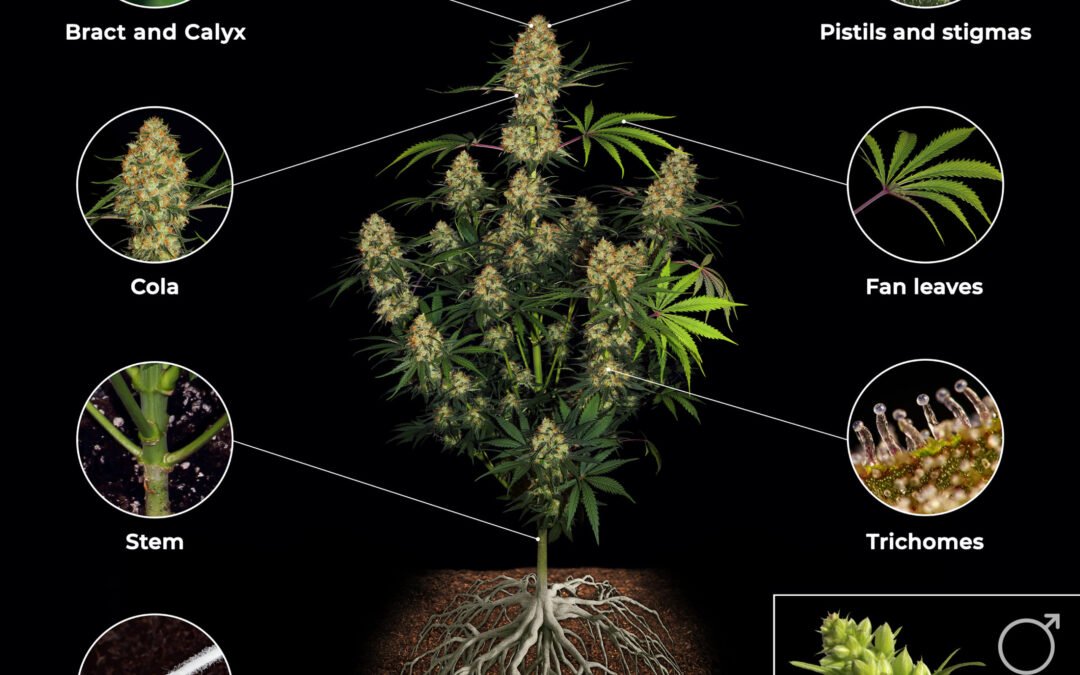
If you have ever looked closely at a cannabis flower, you may have noticed its dense structure, small orange hairs, sugar-like trichomes and tiny leaves surrounding the bud. But what are all these different parts of a cannabis flower, and what does each one do?
Understanding cannabis flower anatomy can make it easier to recognise the visible characteristics of different flower varieties and understand terminology used when comparing cannabis products.
A cannabis bud is made up of several structures, including bracts, calyxes, stigmas, sugar leaves, stems and trichomes. Trichomes are particularly important because they are resin-producing glands associated with many of the cannabinoids and terpenes found on cannabis flowers.
For a broader introduction, see our THC Flower Guide to learn more about cannabis flower, different flower types and what to consider when choosing a product.
What Is Cannabis Flower?
Cannabis flower is the flowering portion of the cannabis plant commonly referred to as a bud.
From a botanical perspective, what consumers commonly call a cannabis “bud” is actually a complex flowering structure made up of multiple smaller components. These include reproductive structures, protective bracts and resin-producing trichomes.
For consumers, however, “THC flower” or “cannabis flower” generally refers to the dried and prepared flower sold as a cannabis product.
The appearance of flower can vary considerably between cultivars. Buds may be compact or more open, light green or darker green, and may have visible orange or reddish stigmas and a noticeable coating of trichomes.
If you are comparing different varieties, our Indica vs Sativa vs Hybrid Guide explains why these commonly used classifications should be considered alongside the individual cultivar rather than used as the only way to judge a flower.
Cannabis Flower Anatomy at a Glance
The easiest way to understand a cannabis bud is to break it down into its main visible and microscopic components:
- Bracts – small structures that protect the reproductive parts of the flower.
- Calyx – a small anatomical structure associated with the base of the flower.
- Stigmas – the hair-like structures commonly called “pistils.”
- Pistil – the female reproductive structure containing the stigma and other components.
- Trichomes – tiny resin-producing glands associated with cannabinoids and terpenes.
- Sugar leaves – small leaves that grow around the flower and can carry trichomes.
- Cola – a cluster of flowers forming along the branches of the plant.
- Stem – provides structural support to the flower.
These components work together to form the familiar cannabis bud.
1. Trichomes
If you look closely at a cannabis flower, the first thing you may notice is its frosty or crystalline appearance.
Those tiny structures are trichomes.
Trichomes are resin-producing glands found across cannabis flowers and other parts of the plant. They are associated with the production and storage of cannabinoids, terpenes and other plant compounds.
There are several types of trichomes, including:
- Bulbous trichomes
- Capitate-sessile trichomes
- Capitate-stalked trichomes
Capitate-stalked trichomes are among the most prominent glandular trichomes found on cannabis flowers and are responsible for much of the visible resin associated with mature buds.
Why Do Trichomes Matter?
For consumers, trichomes are interesting because they are closely associated with the compounds that contribute to a flower’s cannabinoid and terpene profile.
However, more visible trichomes do not automatically mean a product is better. Flower quality depends on several factors, including cultivation, harvesting, drying, storage, cannabinoid composition and terpene preservation.
When comparing products, it is therefore useful to look beyond appearance and consider available product information and laboratory documentation.
You can learn more about evaluating cannabis products in our guide to How to Read a Cannabis COA.
2. Bracts
The small, tear-shaped structures surrounding parts of a cannabis flower are called bracts.
Bracts help protect the reproductive structures of the female flower and can carry a significant number of trichomes. They are also an important component of the dense tissue that makes up a cannabis bud.
When you look at a well-formed cannabis nug, much of the visible structure is made up of overlapping bracts covered in resin glands.
This is one reason cannabis flowers can appear dense and heavily coated with resin.
3. Calyxes
The term calyx is frequently used when discussing cannabis flower anatomy, although cannabis terminology can become confusing because consumers and growers sometimes use “calyx” and “bract” interchangeably.
The calyx is an anatomical structure associated with the flower’s reproductive system and is located within the protective structures of the flower.
Calyxes are usually difficult to identify individually without magnification because they are surrounded by the other components of the flower.
Calyx vs Bract
A simple way to remember the difference is:
Bracts are protective structures that form much of the visible bud, while calyx-related structures are found within the flower around its reproductive components.
This distinction is useful when reading detailed cannabis cultivation or botanical information.
4. Pistils and Stigmas
One of the easiest features to recognise on cannabis flower is the collection of fine hairs extending from the bud.
These are commonly called pistils, but technically the visible hair-like strands are stigmas, which form part of the pistil.
Stigmas can initially appear white or pale and may become yellow, orange, red or brown as the flower develops.
It is important not to use stigma colour alone as a definitive measure of flower quality or maturity. It is simply one visible characteristic of the plant.
Do Orange Hairs Mean Better Cannabis?
Not necessarily.
The colour, number and appearance of stigmas can vary between cultivars and stages of development. They should therefore be considered alongside other characteristics such as trichome development, cannabinoid content, terpene profile and post-harvest handling.
5. Sugar Leaves
Sugar leaves are small leaves that grow around cannabis flowers.
Unlike the large fan leaves found elsewhere on the cannabis plant, sugar leaves are located directly around the developing buds and can become heavily covered in trichomes.
During trimming, some sugar leaves may be removed to create a cleaner-looking finished flower.
A small amount of sugar leaf material is not automatically a sign of poor flower. What matters is the overall presentation, trimming quality and the characteristics of the product.
For shoppers comparing flower, appearance should therefore be considered alongside more objective information such as cannabinoid content and available laboratory testing.
6. Colas
A cola is a cluster of cannabis flowers that develops along the plant’s branches.
The main cola generally develops toward the top of the plant, while additional flower clusters can form at other locations.
The size and structure of a cola can vary depending on genetics and growing conditions.
A large cola does not automatically indicate higher quality. Similarly, smaller individual buds can still have desirable cannabinoid and terpene characteristics.
This is another reason why judging cannabis flower purely by size or appearance can be misleading.
7. The Stem
The stem provides structural support for the cannabis plant and its branches.
Small stems can remain attached to harvested flower, particularly when buds are trimmed by hand or separated from larger branches.
A small amount of stem material is normal, but excessive stem content can affect the amount of usable flower in a package.
When buying cannabis flower by weight, the listed product weight and presentation are therefore more useful considerations than simply judging whether individual buds look large.
What Do the Different Parts of a Cannabis Bud Tell You?
Understanding flower anatomy can help you interpret what you see when examining a cannabis product.
| Flower feature | What it is | What you can learn |
|---|---|---|
| Trichomes | Resin-producing glands | Provides visual information about resin coverage |
| Bracts | Protective flower structures | Form much of the visible bud |
| Calyxes | Internal flower structures | Part of the reproductive anatomy |
| Stigmas | Hair-like structures | Provide a visible feature that changes during development |
| Sugar leaves | Small leaves around flowers | Can contribute to resin-covered surface area |
| Cola | Cluster of flowers | Describes how flowers form on the plant |
| Stem | Structural plant tissue | Supports branches and flower clusters |
None of these features should be viewed in isolation.
A better approach is to consider the flower’s appearance, aroma, cannabinoid profile, terpene information, cultivation details, storage and available laboratory testing together.
How Cannabis Flower Anatomy Relates to Quality
When shopping for cannabis flower, consumers often look for buds that appear dense, well-trimmed and covered with visible trichomes.
Appearance can certainly tell you something about the product, but it does not tell the entire story.
1. Look at Trichome Coverage
Visible trichomes can contribute to the frosty appearance associated with many cannabis cultivars.
However, visual trichome coverage should not be treated as a guarantee of cannabinoid content or overall product quality.
2. Consider the Aroma
Terpenes contribute significantly to the characteristic aromas associated with cannabis.
Different cultivars can produce different terpene profiles, resulting in aromas that may be described as citrusy, fruity, earthy, floral, pine-like or spicy.
3. Check Cannabinoid Information
Look for clearly presented cannabinoid information where available.
For THC flower, this can include THC or THCA content depending on how the product is tested and labelled.
4. Check Laboratory Information
Laboratory documentation can provide additional information that cannot be determined simply by looking at the bud.
A COA may provide information about cannabinoid content and other testing parameters.
For this reason, our Cannabis Lab Testing & COA Guide is a useful companion when comparing products.
5. Consider Storage and Freshness
Even well-grown flower can change when stored poorly.
Cannabis flower should be kept in an appropriate sealed container and protected from excessive heat, light and moisture.
Cannabis Flower Anatomy and Terpenes
Trichomes are closely associated with the production of cannabinoids and terpenes, making them particularly important when discussing cannabis flower chemistry.
Terpenes are aromatic compounds that contribute to the characteristic smell and flavour profiles associated with different cannabis cultivars.
For example, a flower may have a profile described as:
- Citrus
- Berry
- Tropical fruit
- Pine
- Earthy
- Floral
- Spicy
- Herbal
However, the aroma of a product is not determined by a single anatomical feature. Genetics, cultivation conditions, harvesting, drying, curing and storage can all influence the final characteristics of cannabis flower.
This is why comparing the cultivar and terpene profile can be more informative than relying solely on whether a bud looks particularly frosty.
How to Recognise Well-Presented Cannabis Flower
If you’re evaluating flower before buying, there are several characteristics worth considering.
Appearance
Look for flower that appears appropriately trimmed and consistent with the product description.
Trichome Coverage
Visible resin glands can contribute to the characteristic frosted appearance of many cannabis varieties.
Aroma
A noticeable and identifiable aroma can provide useful information about the flower’s terpene profile.
Structure
Cannabis buds can naturally vary from compact to more open structures depending on genetics and cultivation.
Cannabinoid Information
Check the available cannabinoid content rather than relying solely on appearance.
Lab Information
Where available, laboratory documentation can provide a more objective picture of the product.
Packaging
Good packaging should help protect flower from unnecessary exposure to light, air, heat and moisture.
For UK consumers comparing cannabis products, our THC Flower UK Guide provides a broader overview of what to look for when exploring flower products.
Cannabis Flower Anatomy: Common Questions
What is the frosty substance on cannabis buds?
The frosty coating is primarily made up of trichomes. These tiny resin-producing glands are associated with cannabinoids, terpenes and other compounds found in cannabis.
What are the orange hairs on cannabis flower?
The orange or reddish hairs commonly seen on cannabis buds are stigmas, which are part of the pistil. Their colour can change as the flower develops.
What is a cannabis bract?
A bract is a small protective structure surrounding reproductive components of the cannabis flower. Bracts can carry many trichomes and make up a significant portion of the visible bud.
What are sugar leaves?
Sugar leaves are small leaves growing around cannabis flowers. They can contain substantial numbers of trichomes and are often trimmed from finished flower.
Are trichomes the same as pistils?
No. Trichomes are resin-producing glands, while pistils are reproductive structures and contain the hair-like stigmas commonly seen protruding from cannabis buds.
Does more frost automatically mean better flower?
No. A heavy visible coating of trichomes can be an attractive characteristic, but it should not be used by itself to determine overall flower quality.
Explore Cannabis Flower at Sluggers Carts
Understanding cannabis flower anatomy gives you a better way to interpret the appearance and terminology used when comparing flower products.
From the resin-producing trichomes to the bracts, stigmas, sugar leaves and overall bud structure, each part contributes to what makes cannabis flower visually distinctive.
However, appearance is only one part of evaluating a cannabis product. Cannabinoid information, terpene profiles, laboratory documentation, cultivation details, trimming, storage and packaging can all provide additional context.
If you’re ready to explore different flower options, visit the THC Flower collection at Sluggers Carts to browse available products.
Key Takeaways
- Cannabis buds contain several distinct anatomical structures.
- Trichomes are resin-producing glands associated with cannabinoids and terpenes.
- Bracts protect reproductive structures and can carry heavy trichome coverage.
- The visible “hairs” on cannabis flower are technically stigmas, which are part of the pistil.
- Sugar leaves grow around the flower and can contain trichomes.
- Colas are clusters of flowers that develop along branches.
- Flower appearance can provide useful information, but it should not be the sole measure of product quality.
- Cannabinoid information, terpene profiles and laboratory documentation can provide additional context when comparing cannabis flower.