
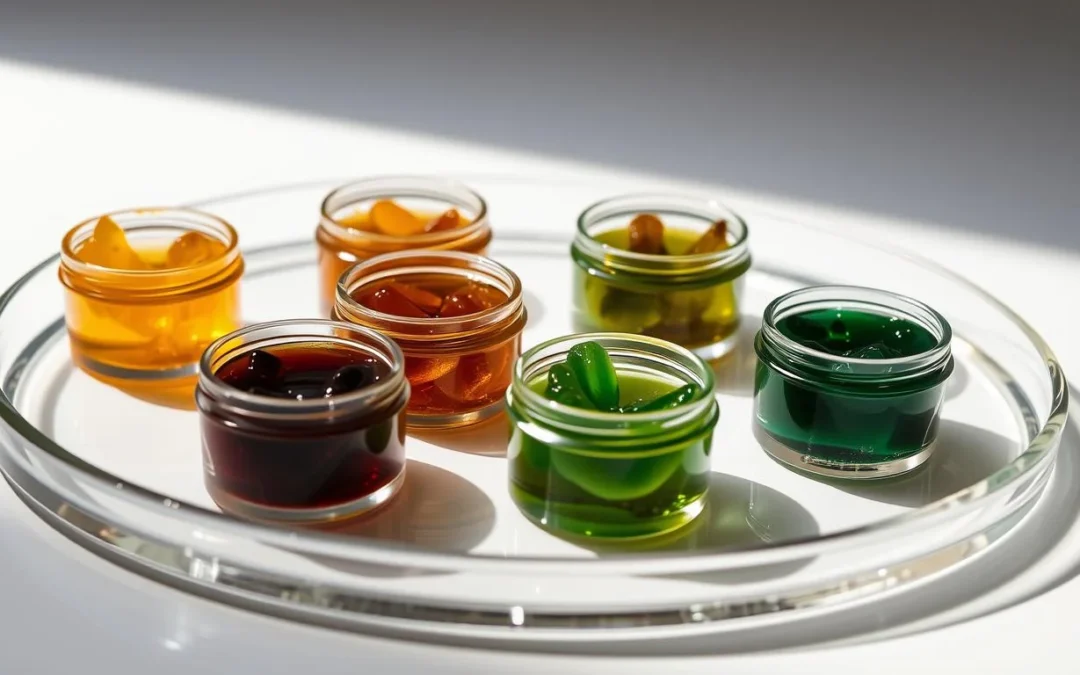
If you’re searching for the best strains for rosin extraction, genetics are one of the first things worth examining.
Not every cannabis cultivar performs equally well when it comes to solventless products. Some varieties are known for heavy resin production, dense trichome coverage and expressive terpene profiles, while others may look impressive as flower without producing particularly desirable rosin.
That is why experienced solventless producers tend to look beyond THC percentage.
The most interesting genetics for rosin generally combine strong resin production, favourable trichome characteristics and terpene profiles that translate well into the finished concentrate.
This Sluggers Carts guide explores some of the most commonly recognised rosin-friendly cultivars, what makes them attractive and how to compare genetics when evaluating solventless products.Browse our THC Concentrates Explained
Best Strains for Rosin at a Glance
| Strain | Known For | Rosin Appeal |
|---|---|---|
| GMO | Heavy resin and pungent profile | Excellent resin-focused genetics |
| GG4 | Sticky, resinous flower | Strong solventless reputation |
| Zkittlez | Fruit-forward terpenes | Excellent flavour potential |
| Papaya | Tropical, fruity profile | Popular terpene-driven choice |
| Wedding Cake | Dessert and creamy notes | Resin and flavour combination |
| Gelato | Sweet, creamy profile | Strong modern hybrid genetics |
| Runtz | Candy and fruit characteristics | Terpene-rich concentrate potential |
| Sundae Driver | Sweet, creamy profile | Often selected for flavour |
There is no single strain that is objectively the best rosin strain.
The ideal cultivar depends on whether the priority is yield, flavour, terpene expression, texture, consistency or overall extract quality.
What Makes a Strain Good for Rosin?
Rosin is a solventless cannabis concentrate, meaning the quality of the starting material has an unusually important influence on the final product.
Unlike extraction methods that can separate compounds through chemical solvents, solventless processing relies heavily on the resin already present in the plant material.
That makes genetics particularly important.
Research and industry sources commonly highlight several characteristics when assessing solventless cultivars:
Trichome Density
Heavy trichome coverage provides more resin-bearing material to work with.
Trichome Structure
The size, shape and physical characteristics of the trichome heads can influence how effectively resin separates during solventless processing.
Resin Production
Sticky, resin-rich cultivars are naturally attractive for rosin production.
Terpene Expression
A cultivar with a distinctive terpene profile can produce a more expressive finished concentrate.
Genetic Consistency
A promising strain is more commercially useful when desirable characteristics can be reproduced consistently across plants and batches.
1. GMO
GMO, sometimes associated with the name Garlic Cookies, has become one of the better-known genetics in the solventless world.
Its reputation comes largely from its combination of heavy resin production and an extremely distinctive aromatic profile.
Why GMO Is Popular for Rosin
GMO is often selected for:
- Heavy resin production
- Dense trichome coverage
- Strong aromatic expression
- Savoury and earthy characteristics
- High-quality concentrate potential
Its distinctive profile can make GMO rosin particularly recognisable.
For consumers comparing commercial rosin products, GMO is therefore a useful example of a cultivar where terpene identity can be just as important as raw cannabinoid concentration.
2. GG4
GG4, also known as Gorilla Glue #4, is another classic resin-heavy cultivar.
Its reputation for sticky, resinous flowers helped establish it as one of the better-known genetics associated with solventless extraction.
Why GG4 Is Considered Rosin-Friendly
GG4 is commonly associated with:
- Heavy resin production
- Sticky flower
- Strong trichome coverage
- Diesel and earthy aromas
- High extract potential
Industry sources continue to identify GG4 among notable solventless cultivars because of its resin characteristics.
For rosin buyers, GG4 is particularly interesting when looking for a classic gas-forward concentrate profile.
3. Zkittlez
If flavour is more important than simply maximising yield, Zkittlez is one of the cultivars worth knowing.
Zkittlez is widely associated with:
- Sweet fruit
- Candy-like aromas
- Tropical notes
- Complex terpene expression
Its appeal demonstrates an important distinction in rosin production:
The highest-yielding strain isn’t necessarily the best-tasting strain.
Some cultivars are valued because their aromatic character translates particularly well into concentrates.
Zkittlez is frequently discussed in this flavour-focused category.
4. Papaya
Papaya has developed a strong reputation among consumers interested in flavour-driven solventless products.
Its tropical and fruity characteristics make it particularly attractive to people looking beyond traditional diesel or earthy profiles.
Papaya Rosin Profile
Commercial products using Papaya genetics may be associated with:
- Tropical fruit
- Sweet aromas
- Exotic terpene expression
- Rich concentrate flavour
Papaya is therefore a strong example of a cultivar where terpene identity can drive consumer appeal.
5. Wedding Cake
Wedding Cake has become one of the most recognisable modern cannabis genetics.
Its popularity extends into solventless products because of its combination of resin production and dessert-style aromatic characteristics.
It is commonly associated with:
- Sweetness
- Vanilla-like notes
- Earthiness
- Dense flower
- Strong resin expression
Wedding Cake is particularly interesting for producers looking for a balance between visual resin production and flavour complexity.
6. Gelato
Gelato is another modern classic that frequently appears in concentrate menus.
Its dessert-oriented genetics are associated with:
- Creamy flavours
- Sweet fruit
- Earthy undertones
- Strong resin characteristics
Gelato’s popularity also makes it commercially attractive.
Consumers often recognise the name, making it easier for brands to communicate the expected flavour direction of a product.
However, a famous strain name doesn’t guarantee a superior batch.
The actual phenotype, cultivation conditions and post-harvest quality can significantly affect the final product.
7. Runtz
Runtz has become one of the most recognisable fruit-forward hybrid names in the modern cannabis market.
It is particularly interesting for solventless products because of its terpene-led appeal.
Why Runtz Works Commercially
Runtz offers a combination of:
- Strong consumer recognition
- Sweet fruit characteristics
- Candy-like aroma
- Modern hybrid genetics
- Concentrate-friendly reputation
For brands developing premium rosin products, recognisable genetics such as Runtz can provide both flavour appeal and strong product identity.
8. Sundae Driver
Sundae Driver is another cultivar frequently associated with dessert-style solventless products.
Its profile tends toward:
- Creamy notes
- Sweet fruit
- Vanilla-like characteristics
- Smooth aromatic expression
It demonstrates that solventless quality isn’t necessarily about producing the strongest possible gas or diesel profile.
For many consumers, flavour complexity is the main reason to choose rosin.
Yield vs Flavour: Which Matters More?
This is one of the biggest questions when comparing rosin genetics.
A strain that produces a large amount of extract isn’t necessarily the one that creates the most desirable final product.
Consider two hypothetical cultivars:
Cultivar A
- High resin production
- Moderate terpene expression
- Strong extraction performance
Cultivar B
- Moderate resin production
- Exceptional terpene profile
- More distinctive flavour
A producer focused purely on output may prefer Cultivar A.
A premium solventless brand focused on flavour may prefer Cultivar B.
This is why the phrase “best strain for rosin” needs context.
The Importance of Trichomes
Trichomes are tiny resin-producing structures found on cannabis flowers.
They contain cannabinoids, terpenes and other plant compounds.
For solventless production, trichome characteristics can be particularly important.
Look for:
- High trichome coverage
- Healthy glandular heads
- Consistent resin production
- Genetics known for solventless performance
Recent solventless industry discussions increasingly focus on trichome head size, structure and resin behaviour, rather than simply counting how “frosty” a flower looks.
This is an important distinction.
A flower can look extremely frosty while still being an average solventless candidate.
Why THC Percentage Isn’t the Most Important Factor
One of the biggest misconceptions about rosin genetics is that higher THC automatically means better extraction.
It doesn’t.
THC concentration tells you about cannabinoid potency, but it doesn’t directly tell you:
- How much resin a plant produces
- How well trichomes separate
- How expressive the terpene profile is
- How well the cultivar performs as solventless material
- How desirable the finished rosin will taste
Recent solventless-focused sources specifically emphasise that THC percentage is not a reliable standalone indicator of extraction performance.
Terpenes: The Secret Behind Great-Tasting Rosin
Terpenes are a major reason rosin can have such distinctive flavour and aroma.
Different cultivars can produce dramatically different terpene profiles.
Common cannabis terpenes include:
- Myrcene
- Limonene
- Caryophyllene
- Linalool
- Pinene
- Humulene
A terpene-rich cultivar can produce a concentrate with much stronger aromatic identity.
Gas Profiles
Often associated with:
- GG4
- GMO
- Chem-family genetics
Fruit Profiles
Often associated with:
- Zkittlez
- Runtz
- Papaya
Dessert Profiles
Often associated with:
- Gelato
- Wedding Cake
- Sundae Driver
This makes terpene profile one of the most useful ways to compare rosin products commercially.
Freshness Matters
Genetics are only part of the equation.
The condition of the starting material can substantially influence the quality of the finished extract.
Industry sources emphasise the importance of freshness and appropriate post-harvest handling when evaluating solventless material.
This means the same cultivar can produce very different results depending on:
- Harvest quality
- Storage
- Drying
- Curing
- Freshness
- Phenotype
- Growing conditions
Consequently, “GMO” or “Runtz” on a label isn’t enough to judge a rosin product.
Phenotype Matters More Than the Strain Name
A strain name represents a genetic family, but individual phenotypes can behave differently.
Two plants carrying the same cultivar name may differ in:
- Resin production
- Terpene concentration
- Trichome characteristics
- Flower structure
- Cannabinoid profile
- Overall extract quality
That’s why experienced producers often talk about finding a particularly strong cut or phenotype, rather than simply choosing the most popular strain name.
Best Strains for Rosin by Category
Best for Resin Production
GMO and GG4
These genetics have strong reputations for resin-heavy flower.
Best for Fruit Flavour
Zkittlez, Runtz and Papaya
These are particularly attractive for fruit-forward concentrate profiles.
Best for Dessert Profiles
Gelato, Wedding Cake and Sundae Driver
These genetics are popular among consumers who prefer creamy and sweet aromatic profiles.
Best for Classic Gas
GG4 and GMO
Ideal examples of pungent, earthy and fuel-forward genetic profiles.
Best for Overall Commercial Appeal
Runtz, Gelato and Wedding Cake
These names combine strong consumer recognition with popular flavour profiles.
How to Compare Premium Rosin Products
If you’re buying or evaluating finished rosin rather than selecting genetics for production, don’t judge the product solely by the strain name.
Look for:
1. Clear Cultivar Information
The manufacturer should identify the genetics used.
2. Cannabinoid Testing
Look for independently tested cannabinoid content.
3. Terpene Information
A detailed terpene profile can provide valuable information about flavour and aromatic identity.
4. Batch Information
Premium products should be traceable to a specific production batch.
5. Transparent Processing Information
Brands should provide meaningful information about their solventless product rather than relying entirely on marketing language.
6. Consistent Product Quality
Repeatability is particularly important for commercial rosin.
A famous cultivar is less valuable if every batch performs differently.
Live Rosin vs Flower Rosin
The word rosin can refer to products made from different starting materials.
Flower rosin uses cannabis flower as the starting material.
Live rosin is associated with fresh, frozen material that is processed into hash before the final rosin stage.
The starting material can significantly affect the final product.
Fresh-frozen material is particularly valued for preserving volatile terpene characteristics, which is one reason live rosin has become such a premium category.
Why Some Strains Are Called “Washers”
In solventless circles, a “washer” refers to genetics that perform particularly well when resin is separated from plant material.
The desirable characteristics can include:
- Large trichome heads
- Suitable trichome structure
- High resin production
- Good separation characteristics
- Strong terpene expression
A cultivar that performs well as flower does not automatically make a good washer.
That distinction is increasingly important as the solventless market becomes more sophisticated.
Best Rosin Strains: What the Experts Actually Look For
If you strip away the marketing, expert cultivar selection generally comes back to a handful of characteristics.
Resin
Does the plant produce enough extractable resin?
Trichomes
Are the glandular heads suitable for solventless processing?
Terpenes
Does the aromatic profile translate into the finished concentrate?
Genetics
Is the cultivar genetically stable and repeatable?
Freshness
Was the starting material handled correctly?
Consistency
Can the desirable characteristics be reproduced across batches?
These factors are ultimately more meaningful than simply choosing whichever strain has the highest THC percentage.
Frequently Asked Questions
What is the best strain for rosin?
There isn’t one universal winner. GMO, GG4, Zkittlez, Papaya, Wedding Cake, Gelato and Runtz are all widely discussed for solventless applications, but the best choice depends on whether the priority is yield, flavour or terpene expression.
What strain produces the most rosin?
Yield varies significantly by phenotype, cultivation, starting material and processing. Genetics known for heavy resin production, such as GMO and GG4, are frequently associated with strong solventless performance, but no fixed yield can be guaranteed.
Is high THC important for rosin?
Not necessarily. THC percentage is only one part of the starting material’s profile. Trichome characteristics, resin production and terpene expression can be more relevant when evaluating solventless potential.
What are the best strains for flavorful rosin?
Fruit-forward genetics such as Zkittlez, Runtz and Papaya are commonly selected for flavour-oriented solventless products, while Gelato and Wedding Cake are popular for dessert-style profiles.
Is GMO good for rosin?
GMO is widely recognised as a resin-heavy cultivar and is frequently discussed as a strong solventless candidate.
Is GG4 good for rosin?
Yes, GG4 has a long-standing reputation for sticky, resinous flower and strong solventless potential.
What makes a strain a good washer?
A good washer typically has desirable trichome characteristics, strong resin production and genetics that separate cleanly during solventless processing.
Does the strain name guarantee good rosin?
No. Phenotype, cultivation, freshness, post-harvest handling and processing can all affect the final product.
Final Verdict: The Best Strains for Rosin
The best rosin genetics aren’t necessarily the ones with the highest THC or the most impressive flower photographs.
The strongest candidates tend to combine heavy resin production, favourable trichome characteristics and terpene profiles that translate into the finished concentrate.
For resin-focused genetics, GMO and GG4 remain notable choices.
For fruit-forward profiles, Zkittlez, Runtz and Papaya are strong commercial favourites.
For dessert-style rosin, Gelato, Wedding Cake and Sundae Driver are particularly recognisable.
But the most important lesson is that genetics are only the starting point.
A premium rosin product depends on the cultivar, phenotype, freshness, resin characteristics, terpene profile and overall quality of the starting material.
For consumers comparing commercial rosin, look beyond the strain name and ask for real cannabinoid data, terpene information, batch details and transparent product documentation.
That is ultimately a better way to identify quality than simply choosing the most fashionable strain on the menu.
Recommended internal links:
- What Is Rosin?
- Live Rosin vs Rosin
- Rosin vs Resin
- THC Concentrates Explained
- What Are THC Concentrates?
- THC Diamonds Explained
- Live Resin vs Rosin
- Cannabis Terpenes Explained
- THC Percentage Explained
- THC Concentrate COA Guide
- How to Identify High-Quality THC Concentrates
- Best Cannabis Strains for Concentrates
- Indica vs Sativa vs Hybrid
- THC Flower vs Concentrates