
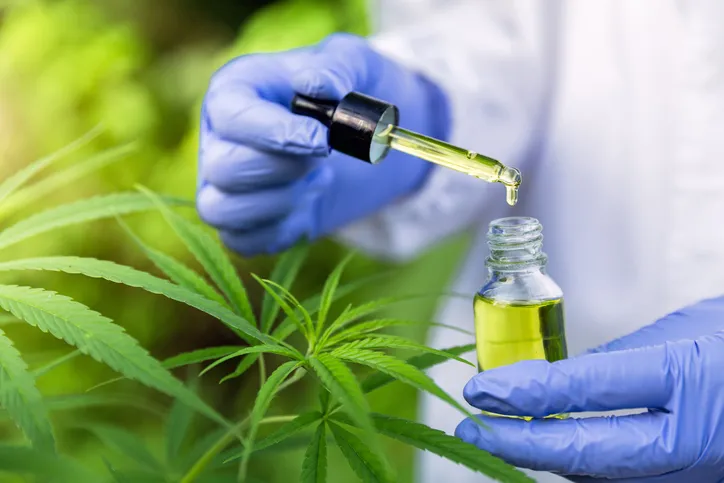
When shopping for CBD products, packaging can tell you a lot about how a product is marketed — but it cannot tell you everything about what is actually inside the bottle, capsule, gummy or extract.
That’s where laboratory testing comes in.
A properly conducted laboratory analysis can identify the cannabinoids present in a product, verify CBD content and screen for potentially unwanted substances such as pesticides, heavy metals, residual solvents and microbial contaminants.
For consumers, this makes laboratory testing one of the most important ways to evaluate CBD product quality, consistency and transparency.
The importance of testing isn’t theoretical. In its analysis of 100 CBD products sold in England and Wales, the Food Standards Agency found substantial variation between labelled and measured CBD content and detected contaminants or controlled cannabinoids in some samples.
So, what should you actually look for in a laboratory report?. Read UK CBD Laws 2026: Is CBD Legal in the UK?
What Is CBD Lab Testing?
CBD lab testing is the independent analysis of a CBD or cannabinoid product to determine its chemical composition and, depending on the testing panel, whether it contains potentially harmful contaminants.
Testing can examine:
- CBD concentration
- THC concentration
- Other cannabinoids
- Pesticides
- Heavy metals
- Residual solvents
- Mycotoxins
- Microbial contamination
- Other chemical contaminants
The exact tests performed depend on the laboratory, product and testing requirements.
A comprehensive report therefore provides considerably more information than a product label alone.
Why Is Laboratory Testing Important for CBD?
CBD products are manufactured using agricultural materials and extraction processes.
That creates several potential points where unwanted substances can enter the finished product.
For example, contaminants can originate from:
- Soil
- Agricultural chemicals
- Processing equipment
- Extraction solvents
- Storage conditions
- Manufacturing environments
- Packaging
- Other ingredients
The FSA’s investigation specifically noted the potential for contaminants such as metals, pesticides, mycotoxins, dioxins and solvent residues to occur in CBD products.
Laboratory testing provides a way of identifying these substances rather than relying solely on the manufacturer’s claims.
What Does a CBD Certificate of Analysis Mean?
A Certificate of Analysis, commonly called a COA, is a laboratory document reporting the results of testing performed on a particular product or sample.
A useful COA should allow you to identify:
- The product tested
- The batch or lot number
- The laboratory
- The testing date
- The cannabinoid results
- Relevant contaminant results
- The testing methods or analytical information
However, not every document labelled “COA” provides the same level of information.
A one-page document showing only a CBD percentage isn’t equivalent to a comprehensive safety analysis.
Cannabinoid Testing: Does the Product Contain What the Label Says?
One of the first things laboratory testing can establish is the cannabinoid profile.
Depending on the product, a laboratory may analyse:
- CBD
- CBDA
- THC
- THCA
- CBG
- CBGA
- CBN
- CBC
- Other cannabinoids
This can help determine whether the advertised cannabinoid content is consistent with laboratory results.
The FSA’s analysis of 100 CBD products found that only 49 matched their CBD claims, while 43 contained less CBD than claimed and eight contained more than claimed.
That finding demonstrates why “CBD content” printed on the front of a package shouldn’t automatically be treated as laboratory-verified.
THC Testing Is Especially Important
A product can be marketed as CBD while containing measurable amounts of THC or other controlled cannabinoids.
For consumers who want to avoid THC exposure, this makes cannabinoid testing particularly important.
The FSA’s 2026 consumer guidance notes that some CBD products can contain controlled substances such as THC and advises consumers to check product information carefully.
A good cannabinoid COA should therefore make it possible to determine whether THC was detected and, where relevant, at what concentration.
This is especially important for products marketed as:
- THC-free
- Broad-spectrum
- CBD isolate
- High-purity CBD
- Zero-THC CBD
Marketing terminology should always be supported by laboratory evidence.
Heavy Metal Testing
CBD products can potentially contain heavy metals originating from agricultural soil or other parts of the supply chain.
Commonly tested metals include:
- Lead
- Arsenic
- Cadmium
- Mercury
The FSA’s survey detected lead in 41 of the 100 CBD products tested, while arsenic was found in 22 and cadmium in 17. Mercury was detected in three samples.
This is one reason a comprehensive CBD safety test can be far more useful than a cannabinoid-only report.
A COA that confirms CBD content but says nothing about contaminants doesn’t provide the same level of information.
Pesticide Testing
Hemp is an agricultural crop, meaning pesticide residues can potentially enter the supply chain.
Laboratories can test products for a large number of pesticide compounds.
In the FSA survey, 35 different pesticides were detected across the products tested, with each product screened against more than 400 pesticides.
This illustrates why pesticide testing is an important part of evaluating CBD product quality.
If a manufacturer advertises a product as extensively tested, check whether pesticide analysis is actually included in the available report.
Residual Solvent Testing
Some CBD extraction methods use solvents during processing.
If those solvents aren’t adequately removed, residues can potentially remain in the finished extract.
Depending on the extraction process, laboratories may test for substances such as:
- Ethanol
- Methanol
- Hexane
- Acetone
- Isopropyl alcohol
- Other solvents
The FSA’s testing detected methanol above the relevant maximum residue level in 25 samples and propan-2-ol above the relevant level in four samples.
This demonstrates why solvent testing can be an important part of a comprehensive quality-control programme.
Mycotoxin Testing
Mycotoxins are substances produced by certain fungi.
Agricultural products can potentially be exposed to fungal contamination during cultivation, storage or processing.
Laboratories can test for relevant mycotoxins, including compounds such as:
- Aflatoxins
- Ochratoxin A
- Other fungal metabolites
The FSA found mycotoxins in 24 of the 100 CBD products tested in its survey.
For consumers, this is another reason to look beyond a basic cannabinoid potency report.
Microbial Testing
Microbiological testing examines products for potentially problematic microorganisms.
Depending on the product, testing may include organisms such as:
- Salmonella
- E. coli
- Yeasts
- Moulds
- Other microbial indicators
The importance of microbial testing can vary according to the product format and manufacturing process.
A CBD oil, capsule, gummy and raw botanical material may not require exactly the same analytical approach.
What Is a Full-Spectrum COA?
A full-spectrum CBD product contains multiple naturally occurring hemp compounds rather than CBD alone.
For this reason, testing may need to identify a broader cannabinoid profile.
A useful report can show:
- CBD
- THC
- THCA
- CBG
- CBN
- CBC
- Other cannabinoids
This helps consumers understand what they’re actually getting rather than relying on a generic “full-spectrum” label.
What Is a Broad-Spectrum COA?
Broad-spectrum products are generally formulated to contain multiple hemp-derived compounds while avoiding intentionally added THC.
However, the exact cannabinoid profile can vary.
A laboratory report can therefore help determine whether the product’s advertised broad-spectrum profile is supported by testing.
Don’t assume that the term “broad-spectrum” automatically means zero THC.
Check the actual laboratory results.
CBD Isolate Testing
CBD isolate is a highly purified form of cannabidiol.
Because the product is designed around high CBD purity, testing may focus heavily on:
- CBD purity
- Residual solvents
- Heavy metals
- Pesticides
- Microbial contaminants
- Other impurities
Recent FSA/FSS safety assessments of high-purity CBD isolate have included detailed analytical specifications covering contaminants and manufacturing controls.
This shows the level of analytical information that can be relevant when assessing purified CBD ingredients.
What Makes a Good CBD COA?
When evaluating a COA, look for several key elements.
1. Product Name
The report should clearly identify the product tested.
2. Batch or Lot Number
The batch should correspond to the product you’re researching.
3. Testing Date
Check when the sample was analysed.
4. Laboratory Name
The report should identify the laboratory that performed the analysis.
5. Cannabinoid Profile
Look for actual cannabinoid results rather than simply a statement that the product “passed.”
6. Contaminant Testing
Where appropriate, look for:
- Heavy metals
- Pesticides
- Residual solvents
- Mycotoxins
- Microbial analysis
7. Testing Method
A professional laboratory report should provide meaningful information about how the analysis was conducted.
Why “Lab Tested” Isn’t Enough
One of the most common marketing phrases in the CBD industry is:
“Lab tested.”
But this phrase doesn’t tell you what was actually tested.
A manufacturer could technically have a product tested for CBD concentration and describe it as “lab tested.”
That doesn’t necessarily mean the product was tested for:
- Pesticides
- Heavy metals
- Solvents
- Microbes
- Mycotoxins
- THC
- Other cannabinoids
The important question isn’t simply:
“Was it tested?”
It’s:
“What was it tested for, by whom and what were the results?”
How to Spot a Weak or Suspicious COA
Be cautious when a laboratory certificate:
Doesn’t identify a batch
Without a batch number, it can be difficult to determine whether the document relates to the product you’re considering.
Only shows CBD
A cannabinoid-only report doesn’t necessarily provide evidence about contaminants.
Doesn’t identify the laboratory
A credible report should make the testing organisation identifiable.
Uses vague “PASS” statements
A simple “PASS” without numerical results gives consumers limited information.
Doesn’t show THC
If a product makes claims about THC content, the report should provide meaningful THC results.
Is extremely old
Laboratory results relate to the tested sample and don’t automatically prove that every future production batch has the same composition.
Doesn’t match the product
Check that the product name, batch number and other identifiers correspond to what you’re purchasing.
Batch Testing vs One-Time Testing
This is an important distinction.
A manufacturer may test one batch and publish the results.
That doesn’t necessarily mean every subsequent batch has exactly the same composition.
Agricultural ingredients and manufacturing conditions can vary.
For this reason, batch-specific testing is generally more informative than a single historical certificate.
When comparing CBD brands, look for evidence that laboratory testing is part of an ongoing quality-control process rather than a one-off marketing exercise.
Independent Testing vs In-House Testing
Testing performed by an independent laboratory can provide additional confidence because the analysis is separated from the company selling the product.
That doesn’t mean every in-house test is automatically unreliable.
However, independent laboratory reports can make it easier for consumers to assess the product objectively.
The most useful question is whether the laboratory has appropriate analytical capability and whether the results are clearly documented.
What Does Accredited Testing Mean?
Laboratory accreditation provides information about the laboratory’s competence and quality-management processes.
For certain analytical methods, accreditation to standards such as ISO/IEC 17025 can be an important quality indicator.
The FSA’s own CBD survey used UKAS/ISO 17025-accredited methods for several areas of analysis, including heavy metals, PAHs, pesticides, mycotoxins, CBD content and selected cannabinoid profiles.
For consumers, this means it’s worth checking not just whether a company says “third-party tested,” but also what laboratory performed the work and whether relevant methods are appropriately accredited.
How Lab Testing Protects Consumers
Laboratory testing supports consumer protection in several ways.
It verifies product composition
Testing can determine whether the product contains the claimed cannabinoids.
It identifies contaminants
Testing can identify substances that shouldn’t be present or that may be present above applicable limits.
It supports regulatory compliance
Testing can help manufacturers demonstrate that their products meet relevant specifications.
It improves transparency
Publishing meaningful test results allows consumers to examine the product rather than relying entirely on advertising.
It helps identify inconsistent batches
Regular testing can identify changes in cannabinoid concentration or contamination between production batches.
Lab Testing and CBD Product Safety in the UK
UK CBD regulation makes testing particularly relevant.
The FSA states that CBD food products are subject to the novel-food framework, and its current guidance advises consumers to check the relevant list of CBD products linked to novel-food applications.
The FSA’s September 2026 recommendations also state that CBD foods remain subject to safety assessment and that health and medicinal claims are not authorised for CBD products.
This means laboratory testing should be considered alongside, rather than instead of, regulatory compliance.
A COA does not make an otherwise unlawful product legal.
Likewise, a product appearing on a regulatory list does not mean every marketing claim made about it is automatically legitimate.
Lab Testing vs Product Claims
A product label might say:
“High-strength CBD.”
A COA can show the actual CBD concentration.
A product might say:
“THC-free.”
A cannabinoid analysis can show whether THC was detected.
A manufacturer might claim:
“Pure CBD.”
Analytical testing can investigate purity and the presence of other substances.
This is why laboratory testing is so valuable:
It turns marketing claims into measurable information.
What Should You Look for Before Choosing a CBD Product?
Use this checklist when comparing products.
CBD Content
Does the laboratory result match the advertised CBD content?
THC Content
Is THC clearly tested and reported?
Cannabinoid Profile
Are other cannabinoids identified?
Heavy Metals
Are lead, arsenic, cadmium and mercury covered?
Pesticides
Has the product been screened for relevant pesticide residues?
Residual Solvents
Is solvent testing appropriate for the extraction method?
Mycotoxins
Has the product been checked where relevant?
Microbial Contamination
Is microbiological testing appropriate for the product format?
Batch Information
Does the COA correspond to the actual batch?
Laboratory
Can you identify the laboratory and its testing credentials?
Why Testing Matters More Than CBD Percentage
A product containing 40% CBD isn’t automatically safer or better than one containing 10%.
CBD concentration tells you only one part of the story.
A genuinely useful quality assessment considers:
Potency + purity + contaminants + cannabinoid profile + manufacturing controls + regulatory compliance.
That’s why consumers should avoid choosing products based solely on the biggest CBD percentage on the label.
How Lab Testing Helps Compare CBD Oils
When comparing CBD oils, laboratory testing can help answer questions such as:
- Does the CBD concentration match the label?
- Is THC present?
- Are other cannabinoids present?
- Are contaminants within relevant limits?
- Does the product have batch-specific testing?
- Is the manufacturer transparent about testing?
This makes COAs particularly useful when comparing several brands.
How Lab Testing Helps Compare CBD Flower and Extracts
The same principles apply to hemp-derived botanical products and extracts, although the relevant legal and regulatory framework can differ by product type.
For botanical material, testing may be particularly important for:
- Cannabinoids
- Pesticides
- Heavy metals
- Microbial contamination
- Mycotoxins
- Other agricultural contaminants
For concentrated extracts, residual solvent testing and cannabinoid profiling can also become particularly relevant depending on the manufacturing process.
The Difference Between Safety Testing and Potency Testing
These two concepts are often confused.
Potency Testing
Answers:
“How much CBD or THC is in the product?”
Safety/Contaminant Testing
Answers questions such as:
“Are pesticides present?”
“Are heavy metals present?”
“Are residual solvents present?”
“Are microbial contaminants present?”
A product can have accurate CBD potency while still requiring additional safety testing.
That’s why a comprehensive testing programme is more informative than a single potency number.
Frequently Asked Questions on How Lab Testing Ensures CBD Product Safety
Does every CBD product need a COA?
A COA is not itself a guarantee of legal compliance or safety, but independent laboratory testing is an important quality-control tool for evaluating cannabinoid content and contaminants.
What does a CBD COA prove?
A COA documents the results of testing performed on a particular sample. Its usefulness depends on the tests performed, the laboratory, the sample identification and the quality of the report.
Can a COA prove that CBD is safe?
Not by itself. A COA provides analytical information about a tested sample. Overall safety also depends on formulation, manufacturing, regulatory requirements, intended use and other factors.
Does a CBD COA show THC?
A cannabinoid analysis may show THC and other cannabinoids, but not every laboratory report includes the same testing panel. Always check the actual report.
What contaminants should CBD be tested for?
Depending on the product and manufacturing process, relevant testing can include pesticides, heavy metals, residual solvents, mycotoxins, microbial contaminants and other chemical contaminants.
Is third-party testing better?
Independent testing can provide additional transparency because the laboratory is separate from the company selling the product. However, the scope and quality of the testing still matter.
How often should CBD products be tested?
Batch-specific testing provides more useful information than relying on a single historical certificate because cannabinoid concentrations and contaminants can vary between batches.
Does “lab tested” mean a CBD product is safe?
No. “Lab tested” doesn’t explain what was tested or the results. Look for the actual COA and examine the cannabinoid and contaminant results.
Final Verdict: Why Lab Testing Matters
Laboratory testing is one of the most important tools for evaluating CBD product quality and safety.
It can verify cannabinoid concentrations, identify THC and other cannabinoids, and screen for contaminants such as pesticides, heavy metals, residual solvents and mycotoxins.
The FSA’s own survey demonstrates why this matters: its analysis of 100 CBD products found substantial variation in labelled CBD content and detected a range of contaminants and controlled cannabinoids in some products.
For consumers, the lesson is simple:
Don’t just ask whether a CBD product is “lab tested.”
Ask:
Who tested it?
What did they test for?
Does the report match the product batch?
Are the actual results available?
Does the product meet the relevant UK regulatory requirements?
A transparent COA doesn’t make every product automatically safe or legal, but it gives consumers valuable information that marketing claims alone cannot provide.
When comparing CBD oils, capsules, gummies, flower or extracts, independent, batch-specific laboratory testing should be one of the first things you check — not an afterthought.
Recommended internal links:
- CBD COA Guide
- How to Read a CBD Lab Report
- CBD for Anxiety
- CBD for Focus
- CBD Oil Guide
- CBD Flower Guide
- CBD Resin Explained
- Full-Spectrum vs Broad-Spectrum CBD
- CBD Isolate Explained
- CBD vs THC
- UK CBD Laws 2026
- Best CBD Products UK
- CBD Product Safety Guide