
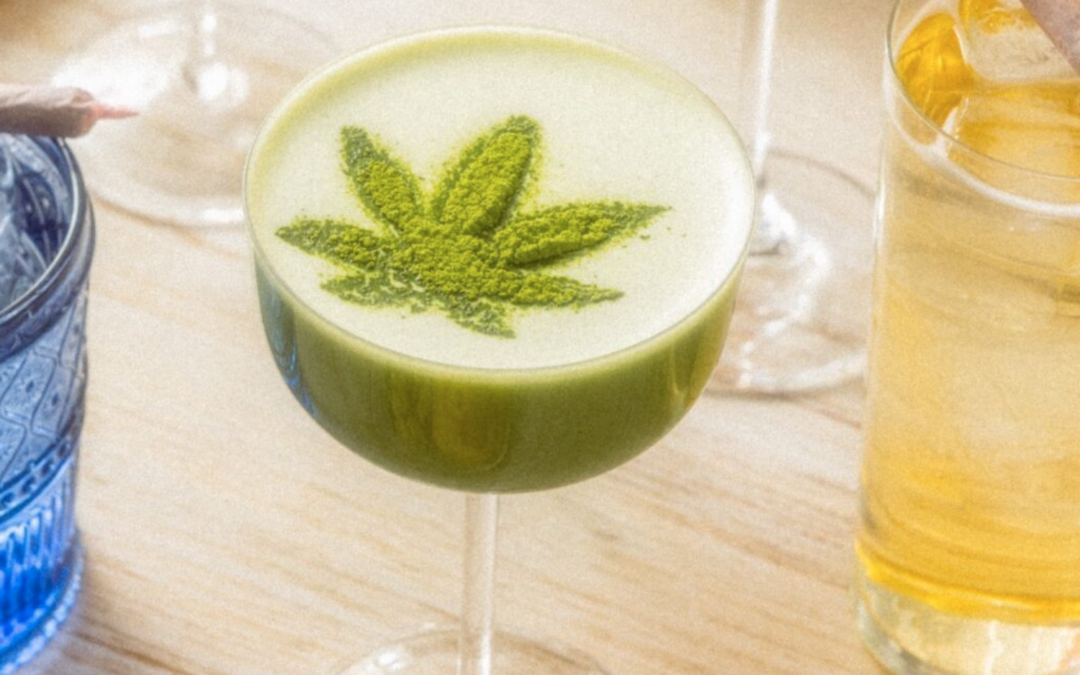
THC drinks have become an increasingly discussed category within the wider cannabis beverage market. From THC-infused sparkling drinks and sodas to cannabis beverages and cannabinoid-infused refreshments, the category is expanding internationally.
But if you are searching for THC drinks in the UK, there is an important distinction to understand: products containing controlled amounts of THC are subject to UK drug-control legislation, and the fact that a product is sold as a “hemp drink,” “cannabis drink” or “THC beverage” does not automatically make it legal to possess or sell in Britain.
This Sluggers Vapes guide explains what THC drinks are, how they differ from CBD beverages, the main types of cannabis drinks, how THC beverages are typically formulated, what to look for when assessing a product, and most importantly, how UK THC drink laws work in 2026. For related information, explore our guides covering THC vapes, THC flower, THC concentrates.
What Are THC Drinks
THC drinks are beverages formulated to contain tetrahydrocannabinol (THC), the principal psychoactive cannabinoid associated with the cannabis plant.
Unlike ordinary soft drinks, a THC beverage is designed to deliver cannabinoids through an orally consumed drink.
Common international examples include:
- THC-infused sparkling water
- THC seltzers
- Cannabis sodas
- THC teas
- Cannabis-infused juices
- THC shots
- Hemp-derived THC beverages
- Delta-9 THC drinks
- Cannabinoid-infused functional beverages
The important point is that the terminology used by manufacturers can vary considerably.
A drink described as a “hemp beverage” may contain no THC at all, while another product marketed as a hemp-derived THC drink may intentionally contain psychoactive THC.
For UK consumers, identifying exactly which cannabinoid is present and in what amount is therefore essential.
How Do THC Drinks Work?
THC drinks are consumed orally rather than inhaled.
Once consumed, the beverage passes through the digestive system and the cannabinoids are absorbed by the body.
The experience can therefore differ from inhaled cannabis products such as THC vapes or cannabis flower.
Several factors can influence the experience associated with an orally consumed cannabinoid product, including:
- The amount of THC present
- The formulation of the beverage
- Individual metabolism
- Whether food has also been consumed
- Product composition
- Individual tolerance
This is one reason why THC drinks should not simply be treated as the beverage equivalent of a vape.
THC Drinks vs CBD Drinks
One of the biggest sources of confusion is the difference between THC drinks and CBD drinks.
THC Drinks
THC is associated with psychoactive effects and is controlled under UK drug legislation.
CBD Drinks
CBD is a different cannabinoid and is not itself controlled in the same way as THC. However, CBD products sold as food in Great Britain are subject to the UK’s novel-food framework.
The Food Standards Agency states that CBD extracts, isolates and synthetic CBD, along with foods containing them, require novel-food authorisation before they can legally be sold as food.
The FSA also maintains a list of CBD products connected with novel-food applications.
Therefore, CBD drink and THC drink are not interchangeable terms.
Are THC Drinks Legal in the UK?
This is one of the most important questions surrounding THC beverages.
Is recreational THC drink legal in the UK?
Generally, you should not assume that a THC-infused drink is legal to buy or sell in the UK simply because it is marketed as a hemp product.
The Home Office classifies cannabis as a Class B controlled drug. Its guidance also states that THC and various other cannabinoids fall within UK controlled-drug legislation.
The Home Office explains that cannabis and controlled cannabinoids are subject to restrictions covering activities such as possession, supply, production, import and export, subject to specific legal exemptions and licensing arrangements.
That makes the UK’s position very different from some US states and other international markets where commercially produced THC beverages are available.
What about hemp drinks?
“Hemp” does not automatically mean “THC-free” or “legal THC product.”
UK industrial hemp rules primarily concern licensed cultivation and the use of permitted non-controlled parts of the plant, particularly seed and fibre. The Home Office states that industrial hemp cultivation licences do not permit the use of cannabis flowers or leaves as ordinary commercial hemp material.
Consequently, consumers should examine the actual ingredients and cannabinoid content rather than relying on marketing terminology.
THC Drinks and UK Food Regulations
There is another layer to the issue: food law.
A beverage intended for human consumption can potentially be subject to food regulations as well as controlled-drug legislation.
This means a product cannot simply be considered legal because it is sold in a bottle, can or sachet.
The regulatory status can depend on:
- The cannabinoid used
- The concentration
- The source material
- The formulation
- Whether the cannabinoid is controlled
- The intended use
- Food regulations
- Novel-food requirements
- Whether relevant exemptions apply
The Home Office specifically notes that its cannabis and cannabinoid drug guidance does not replace other regulatory requirements, including those applying to foods and medicines.
What Types of THC Drinks Exist?
Internationally, the THC beverage market contains several different formats.
THC Seltzers
THC seltzers are carbonated beverages designed to combine sparkling water with flavouring and cannabinoids.
They are often positioned as alternatives to traditional alcoholic drinks.
THC Sparkling Water
These products generally use carbonated water with flavouring and a cannabinoid formulation.
THC Sodas
THC sodas are designed to resemble conventional soft drinks while incorporating THC into the formulation.
THC Teas
Cannabis-infused teas can contain cannabinoids alongside tea extracts and flavouring ingredients.
THC Shots
Cannabinoid shots are smaller-volume beverages designed to deliver a concentrated cannabinoid formulation.
Hemp-Derived THC Drinks
In some international markets, manufacturers use cannabinoids derived from hemp to formulate THC beverages.
However, hemp-derived does not automatically mean UK-legal.
The legality of a cannabinoid product must be assessed under the laws applicable in the UK rather than simply copied from another country’s regulatory framework.
Delta-9 THC Drinks Explained
Delta-9 THC is the cannabinoid most commonly associated with the traditional psychoactive effects of cannabis.
International THC beverages frequently advertise their cannabinoid content using terms such as:
- Delta-9 THC
- Hemp-derived delta-9
- THC-infused
- Cannabis-derived THC
- Hemp-derived THC
For UK consumers, however, the important question is not simply whether the delta-9 THC comes from hemp.
The relevant issue is whether the resulting product complies with UK controlled-drug and other applicable legislation.
THC Drinks vs THC Vapes
THC drinks and THC vapes represent completely different consumption formats.
| Feature | THC Drinks | THC Vapes |
|---|---|---|
| Consumption | Oral | Inhalation |
| Product format | Beverage | Cartridge/disposable |
| Absorption route | Digestive/oral | Respiratory |
| International availability | Increasing | Increasing |
| UK recreational legality | Highly restricted | Highly restricted |
| Main consideration | Cannabinoid + food regulation | Cannabinoid + controlled-drug rules |
Neither format should be assumed to be legal for recreational retail sale in the UK simply because similar products are commercially available elsewhere.
For more information, see our THC Vape UK Guide.
THC Drinks vs THC Edibles
THC drinks are often grouped with cannabis edibles because both involve oral consumption.
However, a beverage is not exactly the same as a conventional edible.
Examples of traditional cannabis edibles include:
- Gummies
- Chocolates
- Baked products
- Capsules
- Candies
THC drinks instead use a liquid beverage as the delivery format.
This distinction can matter when examining formulation, labelling and applicable food regulations.
How Much THC Is in a THC Drink?
International products can contain different amounts of THC per serving or container.
For example, a manufacturer might state:
THC per serving: X mg
Servings per container: X
Total THC: X mg
When assessing any cannabinoid beverage, consumers should distinguish between:
THC Per Serving
The amount of THC attributed to one serving.
Total THC Per Container
The combined amount of THC in the entire product.
THC Concentration
The concentration of THC within the beverage formulation.
These figures should not be confused.
A drink containing multiple servings can have a substantially different total cannabinoid quantity from its advertised per-serving figure.
How to Read a THC Drink Label
If you encounter a cannabinoid beverage, check the packaging carefully.
Look for:
- Product name
- Cannabinoid type
- THC amount
- CBD amount
- Serving size
- Number of servings
- Total cannabinoid content
- Ingredients
- Manufacturer
- Batch or lot number
- Testing information
- Allergen information
- Manufacturing date
- Expiry or best-before information
Avoid relying solely on front-of-package marketing.
The ingredient panel and independent laboratory documentation provide considerably more useful information.
What Is a THC Drink COA?
A Certificate of Analysis (COA) is a laboratory report showing the results of testing performed on a particular product or batch.
A comprehensive cannabinoid COA may contain information about:
- Cannabinoid concentrations
- THC
- CBD
- Other cannabinoids
- Contaminants
- Heavy metals
- Pesticides
- Microbial contamination
- Residual solvents
However, not every COA provides the same level of information.
A credible report should ideally be traceable to the actual product batch.
How to Check a THC Drink COA
If laboratory testing is provided, compare the COA against the product packaging.
Check whether:
- The batch number matches.
- The product name matches.
- The laboratory is identifiable.
- The testing date is provided.
- Cannabinoid results are clearly reported.
- Contaminant testing is disclosed where relevant.
- The report appears complete rather than being a cropped laboratory screenshot.
A product claiming one cannabinoid concentration while its laboratory documentation shows something substantially different deserves additional scrutiny.
For more information, see our THC COA Guide.
Why THC Drink Quality Matters
Cannabinoid beverages require more than simply adding a cannabinoid to liquid.
Formulation can present technical challenges because cannabinoids have different chemical properties from water-based beverage ingredients.
Manufacturers may therefore use specialised formulation and emulsification technologies to distribute cannabinoids through a beverage.
Quality considerations can include:
- Consistent cannabinoid distribution
- Accurate labelling
- Product stability
- Ingredient quality
- Appropriate packaging
- Batch testing
- Contaminant screening
- Manufacturing controls
For consumers, the most useful evidence is documentation rather than marketing language.
Common THC Drink Marketing Terms
The international cannabis beverage market uses a large number of terms.
You may encounter:
- Cannabis beverage
- THC beverage
- THC drink
- THC seltzer
- THC soda
- THC sparkling water
- Hemp-derived THC
- Delta-9 beverage
- Cannabinoid drink
- Infused beverage
- Cannabis-infused drink
These terms do not necessarily describe identical products.
Always check which cannabinoid is actually present.
THC Drinks vs Hemp Drinks
A hemp drink can mean several different things depending on the formulation.
A beverage containing hemp seed ingredients is very different from a beverage containing a psychoactive cannabinoid extracted or produced from hemp.
This distinction is particularly important in the UK.
The Home Office states that industrial hemp licensing relates to low-THC cannabis cultivated for industrial purposes such as seed and fibre, while flowers and leaves remain controlled material.
Therefore, the word hemp should never be treated as a blanket indication that a cannabinoid beverage is legal.
Can You Buy THC Drinks in the UK?
This depends on what the product actually contains and the legal basis under which it is being supplied.
A genuine THC beverage containing a controlled cannabinoid should not be treated like an ordinary soft drink available for unrestricted recreational retail.
The Home Office states that cannabis is a Class B controlled drug and that controlled cannabinoids, including THC, are subject to UK drug-control legislation.
There are specific lawful contexts and exemptions, including regulated medicinal cannabis products, but these should not be confused with ordinary recreational THC beverages.
THC Drinks and Medicinal Cannabis
The UK does have a legal framework for cannabis-based products for medicinal use in humans (CBPMs).
Specialist medical practitioners can prescribe qualifying medicinal cannabis products under the applicable framework.
However, this does not mean recreational THC drinks are legal.
The Home Office explains that companies dealing with qualifying controlled cannabis-based medicinal products can be subject to licensing requirements, while specialist doctors may prescribe qualifying CBPMs under the relevant regulations.
Are CBD Drinks Legal in the UK?
CBD drinks are a separate category from THC drinks.
CBD itself is not treated as a controlled drug in the same way as THC, but CBD food products face UK novel-food requirements.
The FSA states that CBD extracts, isolates, synthetic CBD and foods containing these ingredients require authorisation before they can legally be sold as food.
The FSA also maintains a public list of products linked to novel-food applications.
This means that a CBD beverage should not simply be assumed to be compliant because it contains CBD rather than THC.
THC Drinks in 2026: What Consumers Should Watch
The UK cannabinoid market continues to evolve, particularly around:
- THC regulation
- THCA
- Semi-synthetic cannabinoids
- CBD food products
- Novel-food authorisation
- Hemp regulation
- Cannabis-based medicines
- Product testing
- Labelling requirements
The Advisory Council on the Misuse of Drugs has reviewed semi-synthetic cannabinoids and THCA, with the UK Government responding to aspects of that work in 2026.
This makes it especially important to check current legislation rather than relying on older articles or information copied from US cannabis websites.
How to Choose a Cannabinoid Beverage Safely
If you are researching cannabinoid drinks, use a documentation-first approach.
1. Identify the Cannabinoid
Determine whether the product contains:
- THC
- CBD
- THCA
- Delta-8 THC
- Delta-9 THC
- HHC
- Another cannabinoid
2. Check the Legal Position
Do not assume legality based on:
- “Hemp-derived”
- “Natural”
- “Legal”
- “Under 0.2%”
- “Under 0.3%”
- “Made in the USA”
UK law may treat the product differently.
3. Check the Laboratory Report
Look for a genuine batch-specific COA where available.
4. Check the Label
Compare the label against the laboratory report.
5. Check the Manufacturer
Look for transparent company information, manufacturing details and contact information.
6. Avoid Unsupported Claims
Be cautious of products making exaggerated claims about effects, health benefits or legality.
Common THC Drink Mistakes
Mistake 1: Assuming Hemp Means Legal THC
Hemp and THC are not interchangeable concepts.
Mistake 2: Using US Laws as UK Advice
A THC beverage that is legally sold in one US state does not automatically become legal in the UK.
Mistake 3: Confusing CBD With THC
CBD and THC are chemically related cannabinoids but have substantially different regulatory treatment.
Mistake 4: Ignoring the COA
A product’s marketing page is not a substitute for independent laboratory testing.
Mistake 5: Looking Only at THC Percentage
A percentage alone does not necessarily tell you how much THC is contained in the complete beverage.
Mistake 6: Assuming “Legal High” Means Legal
Marketing terminology does not override the Misuse of Drugs Act or other applicable UK legislation.
Frequently Asked Questions About THC Drinks UK
What are THC drinks?
THC drinks are beverages formulated to contain tetrahydrocannabinol (THC), a psychoactive cannabinoid associated with cannabis.
Are THC drinks legal in the UK?
Ordinary recreational THC drinks should not be assumed to be legal for unrestricted sale or possession. THC and other controlled cannabinoids are regulated under UK drug legislation.
Are hemp-derived THC drinks legal in the UK?
“Hemp-derived” does not by itself make a THC beverage legal in the UK. The specific cannabinoid, formulation, concentration and applicable legislation must be considered.
Are THC drinks the same as CBD drinks?
No. THC and CBD are different cannabinoids with different effects and regulatory treatment.
Can you buy THC drinks online in the UK?
The legality depends on the exact product and circumstances. Consumers should not assume that an online listing means the product is lawful to possess or supply in the UK.
What is a THC seltzer?
A THC seltzer is a carbonated beverage formulated with THC. These products are primarily associated with international cannabis beverage markets.
What is a THC beverage?
THC beverage is a broad term covering drinks formulated to contain THC.
What is the difference between THC drinks and THC vapes?
THC drinks are consumed orally, while THC vapes deliver cannabinoids through inhalation. They are different product categories with different formulations and regulatory considerations.
Do THC drinks contain CBD?
Some cannabinoid beverages contain both THC and CBD, while others contain only one cannabinoid. The ingredient and cannabinoid profile should be checked on the product documentation.
What is a THC drink COA?
A THC drink COA is a laboratory Certificate of Analysis showing test results for a particular product or batch.
Are CBD drinks legal in the UK?
CBD food products are subject to UK novel-food requirements. The FSA states that relevant CBD extracts, isolates and synthetic CBD used in foods require authorisation before legal sale.
Final Thoughts: THC Drinks in the UK in 2026
THC drinks are becoming an important part of the international cannabis beverage market, with products ranging from THC seltzers and sparkling waters to sodas, teas and cannabinoid shots.
However, the UK market operates under a significantly different regulatory framework.
THC is a controlled cannabinoid, and cannabis and controlled cannabinoid products are subject to restrictions under UK drug legislation.
For anyone researching THC beverages in 2026, the safest approach is to separate international cannabis beverage trends from actual UK law.
Before considering any cannabinoid drink, identify the cannabinoid, examine the product documentation, check laboratory testing where available and verify the current UK legal position.