
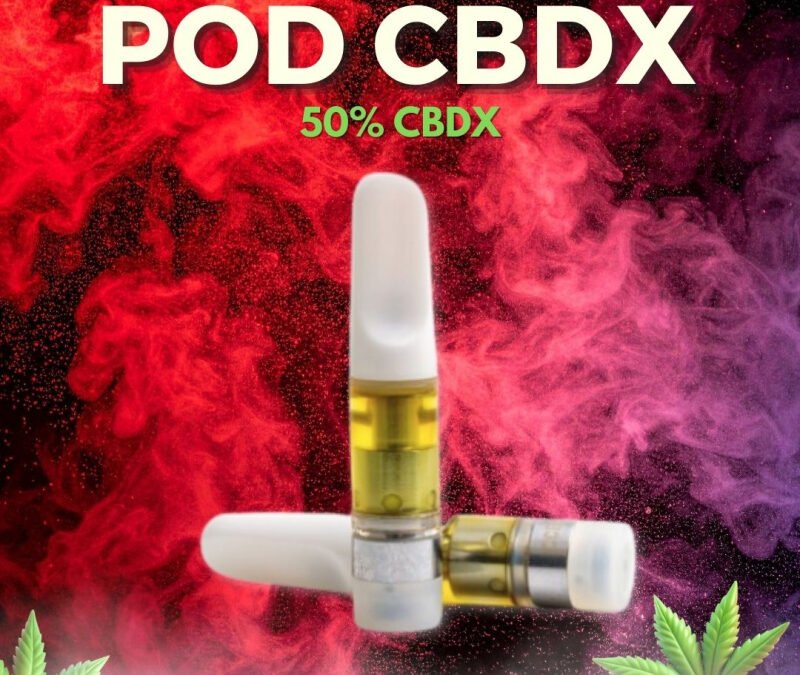
CBDX is a term that has started appearing across the wider cannabinoid and hemp market, creating plenty of questions about what it actually means, how it compares with CBD and what consumers should look for when researching CBDX products in the UK.
Unlike CBD, which refers to the well-defined cannabinoid cannabidiol, CBDX does not have one universally accepted scientific definition. Different manufacturers and retailers may use the term to describe different formulations, blends or emerging cannabinoid products.
That makes understanding the product label, ingredients and laboratory information particularly important.
In this Sluggers Carts guide, we’ll explain what CBDX means, how CBDX compares with CBD, the types of products associated with the term, how to evaluate CBDX products and what UK consumers should know about cannabinoid regulations. Browse our CBD complete guide for details.
What Is CBDX?
CBDX is a relatively new term used within parts of the cannabinoid market to describe enhanced, blended or next-generation CBD and hemp formulations.
Depending on the manufacturer, CBDX may refer to a formulation containing CBD alongside other cannabinoids, hemp-derived compounds or terpene components.
This is an important distinction because CBDX should not automatically be treated as a single cannabinoid in the same way as CBD, CBG or CBN.
Some brands use CBDX as a product or formulation name, while other companies describe it as a broader category of enhanced cannabinoid products.
Why Is CBDX Becoming More Popular?
The cannabinoid industry has expanded considerably beyond traditional CBD products.
Consumers can now encounter products containing or marketed around compounds such as:
- CBD
- CBG
- CBN
- CBC
- THC
- Other hemp-derived cannabinoids
- Terpenes
- Multi-cannabinoid formulations
As this market develops, new product terminology continues to appear.
CBDX is one example of this evolving terminology.
For consumers, the important point is to look past the name CBDX and examine what the actual product contains.
CBDX vs CBD: What’s the Difference?
The biggest difference between CBD and CBDX is that CBD has a specific scientific identity, while CBDX can be used in different ways depending on the manufacturer.
CBD
CBD stands for cannabidiol.
It is a naturally occurring cannabinoid found in cannabis and hemp plants and is widely used in products including:
- Oils
- Gummies
- Capsules
- Vapes
- Topical products
CBD itself is a defined cannabinoid.
CBDX
CBDX may describe an enhanced or blended formulation rather than one universally defined cannabinoid.
A CBDX product could therefore contain CBD alongside additional hemp-derived compounds or other ingredients, depending on the formulation.
Always check the ingredient list and product documentation rather than assuming CBDX products all contain the same ingredients.
What Can CBDX Products Contain?
Because CBDX is not a single standardized formulation, the ingredients can differ between products.
Depending on the manufacturer, a product marketed as CBDX may contain combinations of:
- CBD
- Other cannabinoids
- Hemp extracts
- Terpenes
- Botanical ingredients
- Carrier oils
- Flavouring ingredients
The exact formulation should be available on the product packaging or manufacturer’s product information.
Where laboratory documentation is available, it can provide additional information about the cannabinoid profile.
CBDX Vapes
CBDX terminology can sometimes appear in connection with vape products and cannabinoid extracts.
When researching a CBDX vape, don’t rely solely on the product name.
Check:
- Cannabinoid ingredients
- Total cannabinoid content
- THC content
- Ingredients
- Device information
- Laboratory testing
- Manufacturer information
The term CBDX alone does not tell you exactly what is inside a vape.
This is particularly important because inhalation products can contain a range of ingredients and extracts.
CBDX Oils
CBDX may also be used to describe enhanced cannabinoid oil formulations.
When comparing CBDX oils, look at:
Cannabinoid profile:
Which cannabinoids are actually included?
Concentration:
How much cannabinoid is present per serving or per bottle?
Ingredients:
What carrier oil and additional ingredients are used?
Testing:
Is there batch-specific laboratory information?
Manufacturer:
Can you identify who produced the formulation?
These details are considerably more useful than the CBDX label alone.
CBDX Gummies and Edibles
Some cannabinoid brands use CBDX-style terminology for edible formulations.
With gummies and other edible products, consumers should pay particular attention to:
- Total cannabinoid content
- Cannabinoid content per serving
- Ingredients
- Serving information
- THC content
- Batch information
- Applicable UK requirements
Do not assume that a product marketed as CBDX is equivalent to a standard CBD gummy.
The formulation needs to be assessed individually.
Does CBDX Get You High?
There is no single answer based simply on the CBDX name.
Whether a CBDX product can produce intoxicating effects depends on what the formulation actually contains.
A product containing only non-intoxicating cannabinoids such as CBD is different from a formulation containing THC or another intoxicating cannabinoid.
This is why checking the cannabinoid profile is important.
If THC is present, consumers should take the product’s stated THC content and applicable UK regulations into account.
CBDX Effects: What Should You Expect?
It is difficult to describe one universal set of CBDX effects because CBDX does not represent one standardized formulation.
Different products can contain different cannabinoid combinations and concentrations.
The experience associated with a cannabinoid product can also vary according to:
- The cannabinoids present
- Concentration
- Product format
- Individual sensitivity
- Amount consumed
- Other ingredients
For that reason, be cautious of websites making guaranteed claims about what every CBDX product will do.
A more reliable approach is to examine the specific formulation and available testing information.
How to Check the Quality of a CBDX Product
Because CBDX terminology can vary, product transparency is particularly important.
Before considering a CBDX product, look for the following.
1. Clear Ingredients
The manufacturer should clearly identify what is contained in the product.
Avoid relying on a marketing name without checking the actual ingredients.
2. Cannabinoid Information
Look for information identifying the cannabinoids and their quantities.
3. Batch Testing
Where available, a Certificate of Analysis (COA) can provide useful information about a particular batch.
Depending on the testing laboratory, a COA may include cannabinoid levels and information about certain contaminants.
4. Manufacturer Information
A transparent manufacturer should provide identifiable company information and product details.
5. Clear Labelling
The packaging should provide appropriate information about ingredients, quantities and usage.
CBDX vs CBD vs CBG vs CBN
CBDX can be confusing because it appears alongside established cannabinoid terminology.
| Term | What it refers to |
|---|---|
| CBD | Cannabidiol, a defined cannabinoid |
| CBG | Cannabigerol, a defined cannabinoid |
| CBN | Cannabinol, a defined cannabinoid |
| CBDX | A variable term that can describe different enhanced or blended cannabinoid formulations |
This distinction is important when researching products online.
CBD, CBG and CBN have specific chemical identities. CBDX may depend on how an individual manufacturer defines and formulates the product.
Is CBDX Legal in the UK?
This is one of the most important questions for UK consumers.
There is no simple rule that makes every product labelled “CBDX” automatically legal or illegal.
The legality depends on the actual formulation and applicable UK regulations.
For example, a product containing cannabinoids that are controlled or restricted may be treated differently from a compliant CBD product.
UK consumers should therefore consider:
- The actual cannabinoids present
- THC content
- Product category
- Ingredients
- Applicable controlled-drug rules
- Novel Food requirements where applicable
- Labelling and safety requirements
The CBDX name itself should not be used as proof of legality.
For the latest information, see our UK Cannabis Laws Guide and our dedicated UK CBD Laws Guide.
What Should You Look for When Buying CBDX Products?
If you’re researching CBDX products, consider the following checklist:
Check the formulation
Find out exactly what the manufacturer means by CBDX.
Check the cannabinoid profile
Don’t assume that CBDX means CBD-only.
Check THC content
This is particularly important when considering UK compliance.
Look for laboratory testing
Where available, review the relevant COA rather than relying solely on marketing claims.
Check the manufacturer
Look for transparent company and product information.
Read the label
Make sure the product clearly identifies its ingredients and cannabinoid content.
Why Is CBDX Different From Traditional CBD?
Traditional CBD products are relatively straightforward to identify because CBD refers specifically to cannabidiol.
CBDX can be more complicated because the term may be used to describe:
- Enhanced CBD formulations
- Multi-cannabinoid products
- Hemp extracts
- New cannabinoid formulations
- Brand-specific product concepts
Consequently, two products marketed using the CBDX name could potentially have different formulations.
That’s why product-specific information is more important than the terminology itself.
CBDX FAQs
What does CBDX stand for?
CBDX does not have one universally accepted scientific definition. In the cannabinoid market, it may be used to describe enhanced, blended or next-generation CBD and hemp formulations.
Is CBDX the same as CBD?
No. CBD is a specific cannabinoid known as cannabidiol, while CBDX can be a broader product or formulation term.
Is CBDX a cannabinoid?
Not necessarily. The term can refer to a formulation or marketing category rather than one standardized cannabinoid. Always check the individual product’s ingredients.
Does CBDX contain THC?
Some formulations may contain THC or other cannabinoids, while others may not. Check the product’s cannabinoid profile and laboratory documentation.
Is CBDX legal in the UK?
The answer depends on the actual formulation and applicable UK regulations. The CBDX name alone does not determine legality.
How can I tell what is inside a CBDX product?
Check the ingredient list, cannabinoid information, manufacturer information and any available batch-specific laboratory report or COA.
Final Thoughts: Understanding CBDX
CBDX is an emerging term in the wider cannabinoid market, but it should not automatically be treated as a single standardized cannabinoid.
The most important thing to understand is what the individual manufacturer means by CBDX and what the product actually contains.
When comparing CBDX products, look beyond the name and examine the cannabinoid profile, ingredients, THC content, laboratory testing and manufacturer information.
For UK consumers, legality and compliance should also be considered based on the actual formulation rather than the product’s marketing terminology.