
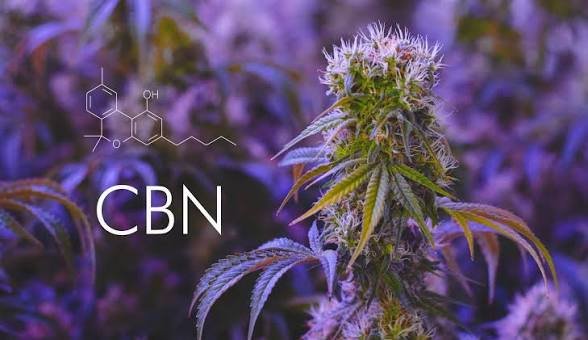
CBN, short for cannabinol, is one of the naturally occurring cannabinoids associated with the cannabis plant. It has attracted increasing interest from people researching cannabinoids, cannabis chemistry and the differences between compounds such as CBN, CBD and THC.
However, understanding CBN in the UK requires more than looking at its reported characteristics. UK drug legislation treats cannabinol differently from CBD, and the legal status of a cannabinoid can depend on the substance, formulation and intended use.
This guide Sluggers Vapes explains what CBN is, how it differs from CBD and THC, commonly discussed effects, why CBN is associated with ageing cannabis, and the current UK legal position. Browse CBN vs THC Guide for more.
What Is CBN?
CBN (cannabinol) is a cannabinoid found naturally in cannabis.
Unlike some cannabinoids that are present in larger quantities in fresh cannabis varieties, CBN can be associated with the degradation of THC over time. UK government material notes that THC can convert to CBN and that this can be relevant to the storage of cannabis and cannabinoid products.
CBN is therefore an interesting compound from both a cannabis chemistry and product-quality perspective.
It is important, however, not to assume that a product containing CBN will have identical characteristics to THC-containing cannabis simply because the compounds are chemically related.
How Is CBN Produced Naturally?
CBN can occur as cannabis compounds change over time.
Environmental factors such as:
- Air exposure
- Light
- Humidity
- Temperature
- Storage conditions
- Time
can influence cannabinoid composition.
Government research notes that THC can convert to CBN, making storage conditions relevant when considering cannabinoid profiles.
This is one reason laboratory testing can be useful when evaluating cannabinoid products: the cannabinoid profile of an individual batch may provide more meaningful information than relying solely on a product or strain name.
CBN vs CBD
CBN and CBD are different cannabinoids.
CBN stands for cannabinol, while CBD stands for cannabidiol.
Although both occur naturally in cannabis, they have different chemical structures and regulatory considerations.
The most important UK distinction is legal.
Pure CBD is not controlled under the Misuse of Drugs Act 1971,
Is CBN Legal in the UK?
The legal position surrounding CBN in the UK is different from that of CBD and should be understood carefully before considering any CBN-containing product.
Under the UK’s Misuse of Drugs Act 1971, cannabinol (CBN) is listed as a Class B controlled drug. The Home Office also identifies cannabinol derivatives as controlled substances. This means CBN should not be treated as an unrestricted cannabinoid simply because it is naturally present in cannabis.
Is CBN a Controlled Substance in the UK?
Yes. The Home Office’s current drug-licensing guidance specifically states that cannabinol is a Class B drug under Part 2 of Schedule 2 of the Misuse of Drugs Act 1971.
This is an important distinction when comparing CBN with CBD.
CBD itself is not listed as a controlled drug, whereas CBN is. However, the legal position of a finished product can depend on its complete composition, formulation and whether a specific exemption or licensing arrangement applies.
Can You Buy CBN Products in the UK?
You should not assume that a product labelled “CBN” or “CBN oil” is automatically legal to buy, possess or supply in the UK.
Because CBN is a controlled drug, products containing CBN can fall within UK controlled-drug legislation. The Home Office explains that controlled cannabinoids and preparations containing controlled drugs are subject to restrictions unless an applicable exemption applies.
This means the legality of a particular CBN product cannot be determined simply from its marketing label or from the fact that it is sold online.
CBN vs CBD: Why the Legal Difference Matters
CBN and CBD are both cannabinoids, but they do not have the same legal classification in the UK.
| Cannabinoid | General UK controlled-drug position |
|---|---|
| CBN (Cannabinol) | Class B controlled drug |
| CBD (Cannabidiol) | Not itself controlled under the Misuse of Drugs Act 1971 |
| THC | Controlled cannabinoid |
The distinction is important because a product’s legal status depends on its actual ingredients and applicable legislation, not simply on whether it is described as a “cannabinoid product.”
What About CBN in CBD Products?
This area can become particularly complicated.
The Home Office explains that CBD products may contain controlled cannabinoids, including THC and other controlled substances. Where a product contains controlled cannabinoids, its legal status needs to be assessed under the relevant controlled-drug rules and any applicable exemption.
Therefore, a product being marketed primarily as CBD does not automatically make every cannabinoid contained within it legally unrestricted.
What About CBN Medicines?
There is a separate framework for certain cannabis-based products for medicinal use in humans (CBPMs).
The Home Office defines CBPMs as products containing cannabis, cannabis resin, cannabinol or a cannabinol derivative that are produced for medicinal use and meet the applicable definition. Specialist medical practitioners can prescribe qualifying cannabis-based medicinal products under the relevant regulations.
This should not be confused with ordinary consumer CBN products sold online.
Does the UK CBN Law Apply Everywhere in the UK?
UK drug-control legislation is a devolved-area complication, particularly when considering food and consumer-product regulations across Great Britain and Northern Ireland. The Home Office guidance cited above concerns the controlled-drug framework, while food regulation can involve separate rules.
For that reason, anyone considering a CBN-containing product should check the rules applicable to their specific location and product rather than relying on a general statement that “CBN is legal” or “CBN is illegal.”
What Should UK Consumers Check?
If you encounter a CBN product marketed in the UK, don’t rely solely on claims such as:
- “Legal CBN”
- “UK legal cannabinoid”
- “Non-psychoactive”
- “CBD alternative”
- “Hemp-derived”
These descriptions do not by themselves establish the legal status of the finished product.
Instead, consider:
- The exact cannabinoid ingredients
- The concentration of controlled cannabinoids
- The product’s intended use
- Whether it falls within a recognised legal exemption
- Whether appropriate licensing or medicinal regulations apply
- The current UK government guidance
The Bottom Line on CBN UK Law
CBN is not legally equivalent to CBD in the UK. Cannabinol is currently classified as a Class B controlled drug under the Misuse of Drugs Act 1971.
Consequently, consumers and businesses should not assume that ordinary CBN oils, gummies, vapes, flower or other CBN-containing products are automatically lawful simply because they are marketed as cannabinoids or hemp-derived products.
The legal position can depend on the precise product and applicable exemptions or licensing arrangements. UK government guidance should therefore be checked before making decisions about possession, supply, importation or sale of CBN-containing products.